


Get in touch
Every shop that washes parts, services vehicles, or runs coolant through a machine tool produces oily wastewater. What happens to that water after it leaves your floor drain is a decision you make once, at the moment you buy the equipment. An undersized or wrong-type oil water separator will either flood with oil, fail an inspection, or cost far more in maintenance than the unit itself. Getting the selection right comes down to a handful of measurable factors: peak flow, oil chemistry, effluent targets, available floor space, and how much attention your team can realistically give the unit each week. This guide works through those factors in the order that matters.
Most buying mistakes happen before anyone opens a catalog. A shop owner compares two units by price and capacity, picks the cheaper one, and discovers six months later that the unit was never designed for the type of oil coming down the drain. Characterization comes first.
Size on the worst hour of the week, not on a typical Tuesday. If a pressure washer, a parts washer, and a floor drain all discharge into the same line, their flows add up. A unit rated for 20 gpm that receives a 35 gpm surge will push oil straight through to the outlet, and the failure will only show up during an inspection or a downstream problem. Measure or estimate the combined discharge of every connected source, then add a margin for future equipment.
Not all oil behaves the same way in water, and the difference determines which technology you need.
If your shop uses water-based cleaners and liberally applied degreasers, assume you are dealing with at least partially emulsified oil. This single fact eliminates some low-cost options immediately.
Brake dust, grinding swarf, sand, and floor sweepings settle in the same tank as the oil. A separator without adequate sludge storage or pre-settlement will clog its coalescing media quickly. Ask how much solids volume the unit holds before it needs pumping out.
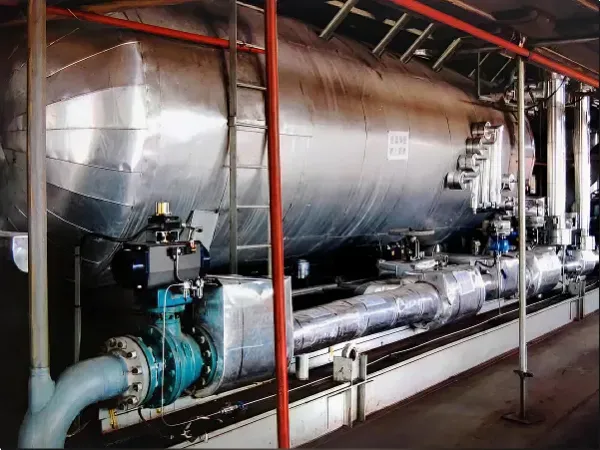
Four families cover the vast majority of shop applications. Each has a genuine advantage and a genuine limitation.
A practical pattern for many shops is a two-stage approach: a coalescing plate unit for bulk removal, followed by a polishing stage only if the local discharge limit actually requires it. Buying polishing capacity you do not need is one of the most common ways to overspend.
Below-grade installation saves floor space but makes inspection and cleaning harder, and it usually costs more to build. Above-ground units are easier to maintain and to modify later, but they need a pump or a gravity feed arrangement and a footprint your layout can spare.
Multi-stage units separate solids, free oil, and emulsified oil in sequence. They cost more but reduce the frequency of manual cleaning and produce a more consistent effluent. Choose multi-stage when your team has limited time for maintenance, which is most shops.
Decide early whether the treated water goes to a sanitary sewer, a holding tank, or a recycling loop back to the wash bay. Recycling changes the sizing calculation because the water returning to the bay already carries residual oil.
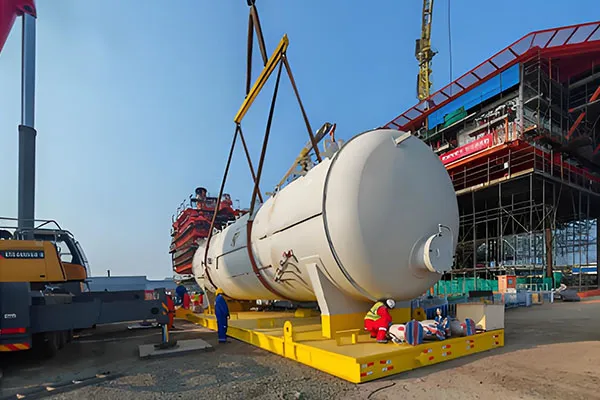
Discharge limits are set locally and vary widely, but they are usually expressed as a concentration of fats, oils, and grease, often in milligrams per liter, sometimes with a daily mass cap on top of it. Two practical steps:
Documentation matters as much as performance. Keep the sizing calculation, the manufacturer's rated performance, and your maintenance log. When an inspector arrives, a well-kept log answers more questions than any single piece of equipment.
Purchase price is rarely the largest cost over a ten-year horizon. Budget for the following from day one:
A cheaper separator that requires twice the maintenance labor usually loses on total cost within three years. Put the numbers in a simple spreadsheet before committing.
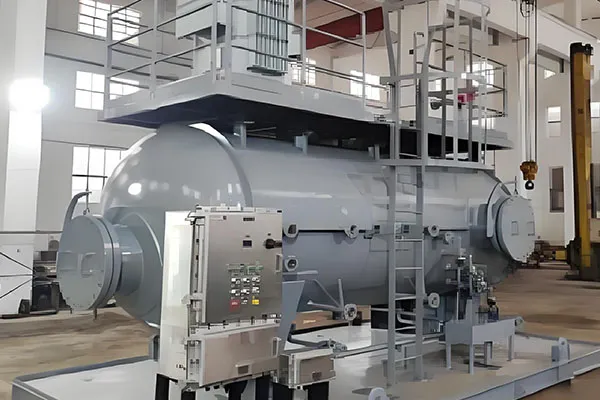
The quality of the answers tells you as much as the spec sheet. Ask how the unit was sized for your exact flow and oil type, what happens during a flow surge, how long media lasts, what spare parts are stocked, and whether the manufacturer can supply service documentation for your records. Suppliers such as Zhengyuan Petrochemical that support sizing calculations and provide traceable performance data make the compliance side considerably easier, and they tend to be more useful partners when something needs adjustment after installation.
Look for an oil sheen at the outlet, frequent media clogging, and oil carryover that appears shortly after a busy shift. Any of these suggests the unit is being pushed past its rated flow.
Yes, but only if it is sized on the combined peak flow and can tolerate the detergent load from the parts washer. Detergents emulsify oil, so a gravity-only unit will struggle.
It depends on solids loading, but most shops should inspect monthly and clean or replace at least annually. If your media needs attention more often than that, the unit is likely too small.
No. The right question is whether the technology matches your oil chemistry and your discharge limit. A correctly sized coalescing plate unit will outperform an oversized, wrong-type system every time.
Choosing an oil water separator is ultimately a matching exercise: your flow, your oil, your limit, your space, your maintenance capacity. Work through those five items honestly, put the comparison on paper, and the right unit becomes obvious. Shops that treat the decision as an engineering problem rather than a purchase tend to buy once and forget about it, which is exactly the outcome you want.
Choosing the Right Oil Water Separator for Your Shop
2026-11-02 01:29Luoyang Zhengyuan Petrochemical Obtains Bureau Veritas (BV) Certification for Pipes, Fittings and Pressure Vessels
2026-10-31 06:44Milestone Achieved: Luoyang Zhengyuan Petrochemical Successfully Obtains RINA Factory Approval Certificate
2026-10-28 08:25Great News! Luoyang Zhengyuan Petrochemical has Successfully Obtained the Manufacturing Assessment (MA) Certificate from the American Bureau of Shipping (ABS).
2026-10-28 08:11Address: No. 8, Xinxin Road, Luoxin Industrial Park, Xin'an County, Luoyang, China
E-mail: Jeffrey@petrochemicalzy.com
Phone: +8615896509239

Zhengyuan Petrochemical
Create the greatest value for customers
Provide the best quality products and services
+8615896509239
Jeffrey@petrochemicalzy.com
No. 8, Xinxin Road, Luoxin Industrial Park, Xin'an County, Luoyang, China
 WhatsApp