



Get in touch
In modern oil production and processing, especially in heavy oil operations, efficient water–oil separation is one of the most critical challenges. Electrostatic coalescers have become a key technology in dehydration and desalting systems because they significantly improve the merging (coalescence) of dispersed water droplets inside crude oil. Among the available technologies, alternating current (AC) and direct current (DC) electrostatic coalescers are the two most widely discussed configurations.
However, when operators deal with heavy oil—characterized by high viscosity, complex emulsions, high water cut, and natural surfactants—the choice between AC and DC systems is not straightforward. This article provides a practical, engineering-based comparison of AC vs DC electrostatic coalescers, focusing on real operational performance, limitations, and suitability for heavy oil applications.
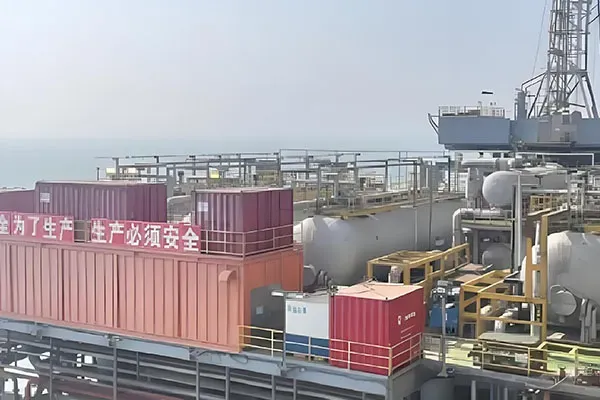
Electrostatic coalescers work by applying a high-voltage electric field to an oil–water emulsion. The electric field polarizes water droplets, forcing them to attract each other and merge into larger droplets. Once the droplets become large enough, gravity separates them from the oil phase.
Industrial systems typically use:
AC fields (alternating current)
DC fields (direct current)
Hybrid AC/DC systems
In practice, AC systems are more widely adopted in crude oil processing due to their robustness and ability to handle varying water content, while DC systems are often used in specific conditioning stages or low-water emulsions.
AC electrostatic coalescers apply a continuously alternating electric field. This causes water droplets to oscillate back and forth, increasing collision probability and promoting coalescence.
Key characteristics of AC systems:
Alternating field causes droplet vibration and alignment
Better tolerance to high water cut emulsions
Widely used in upstream oil dehydration units
More stable under fluctuating process conditions
AC systems are considered the conventional industrial standard for crude oil treatment because they are stable and effective across a broad range of feedstock conditions.
Strengths in heavy oil:
Handles higher water content better than DC
More resistant to process disturbances
Less sensitive to oil conductivity fluctuations
Limitations:
Less effective in extremely stable emulsions
Energy efficiency may drop in high-viscosity heavy oil
Can struggle with chemically stabilized water droplets
DC electrostatic coalescers use a steady electric field instead of a fluctuating one. This creates a constant force that polarizes droplets and encourages them to migrate toward electrodes or each other.
Key characteristics of DC systems:
Continuous electric field alignment
Strong directional droplet movement
Often used in low-water-content emulsions
Can be combined with pulsed DC for improved efficiency
Research shows that DC and pulsed DC fields can enhance coalescence behavior, but performance strongly depends on field strength, waveform, and emulsion stability.
Strengths in heavy oil:
Can improve separation in pre-treated emulsions
Useful in staged separation systems
Better control in specific low-flow conditions
Limitations:
Less effective in high water-cut heavy oil
Higher risk of electrical instability or corrosion in conductive emulsions
Not ideal for raw heavy crude without conditioning
Heavy oil is fundamentally different from light or medium crude. It typically contains:
High viscosity
Strongly stabilized water-in-oil emulsions
High asphaltene and resin content
Elevated conductivity and impurities
These properties make water droplets harder to coalesce and separate.
In fact, traditional electrostatic approaches often face reduced efficiency when dealing with heavy oil emulsions, which is why advanced or hybrid technologies are frequently required.
Below is a practical comparison focused specifically on heavy oil performance:
Separation Efficiency
AC: Higher overall efficiency in unstable, high-water emulsions
DC: Better in controlled, low-water or pre-treated conditions
Emulsion Handling Ability
AC: More tolerant to complex heavy oil emulsions
DC: Sensitive to emulsion stability and conductivity
Operational Stability
AC: Stable across varying flow rates
DC: Requires tighter process control
Energy and System Design
AC: Higher energy demand in some configurations but more forgiving
DC: Potentially more energy-efficient in optimized low-load conditions
Industrial Usage Trend
AC: Dominant in upstream heavy oil dehydration systems
DC: Mainly used in hybrid or specialized applications
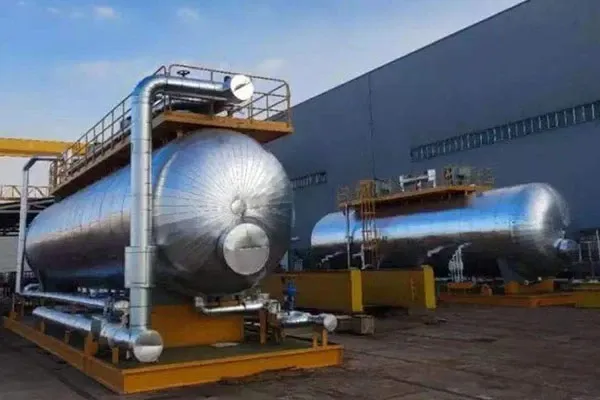
In real industrial practice, the debate is no longer strictly AC vs DC. Many modern systems integrate both.
Hybrid electrostatic coalescers combine:
AC field for droplet vibration and collision
DC field for directional migration and faster settling
This dual approach improves performance in difficult heavy oil emulsions by addressing multiple coalescence mechanisms simultaneously.
Recent developments in electrostatic separation technology show that combining AC and DC fields can significantly improve efficiency in challenging crude oil conditions.
The answer depends on the operating conditions, but a clear industry pattern emerges:
AC Electrostatic Coalescers are better when:
Processing raw heavy crude with high water content
Emulsions are stable and difficult to break
Operational robustness is the priority
DC Electrostatic Coalescers are better when:
Feed oil has been pre-treated or partially dehydrated
Water content is relatively low
The system is part of a staged separation process
Hybrid AC/DC systems are best when:
Heavy oil has extremely stable emulsions
High efficiency and compact equipment are required
Operators need flexibility across changing feed conditions
From an engineering and operational standpoint, most heavy oil facilities do not rely solely on DC systems. AC-based or hybrid AC/DC electrostatic coalescers dominate industrial deployment because heavy oil emulsions require strong turbulence-inducing and vibration-enhancing mechanisms, which AC fields naturally provide.
DC systems still play an important role, but mainly as supporting or optimization stages rather than standalone solutions in heavy oil dehydration units.
When comparing AC vs DC electrostatic coalescers for heavy oil, there is no universal winner. However, industry experience and process physics both lead to a consistent conclusion:
AC systems are more reliable and widely used for raw heavy oil processing
DC systems are more specialized and best suited for controlled or staged environments
Hybrid AC/DC systems represent the most advanced and efficient solution for challenging heavy oil emulsions
For operators aiming to improve separation efficiency, reduce downstream corrosion risks, and optimize production cost, the selection should always be based on crude properties, water cut levels, and process stability rather than theoretical performance alone.
In modern heavy oil production, success is not about choosing AC or DC in isolation—it is about designing the right electrostatic strategy for the specific crude and operating environment.
Nanoparticle-Enhanced Electrostatic Coalescers: Next-Gen Efficiency
2026-10-05 01:29Top 10 Questions When Selecting an Electrostatic Coalescer Vendor
2026-09-28 01:29Electrostatic Coalescer for Produced Water Treatment: Benefits Explored
2026-09-21 01:29How to Size an Electrostatic Coalescer for Your Production Rate
2026-09-14 01:29Address: No. 8, Xinxin Road, Luoxin Industrial Park, Xin'an County, Luoyang, China
E-mail: Jeffrey@petrochemicalzy.com
Phone: +8615896509239

Zhengyuan Petrochemical
Create the greatest value for customers
Provide the best quality products and services
+8615896509239
Jeffrey@petrochemicalzy.com
No. 8, Xinxin Road, Luoxin Industrial Park, Xin'an County, Luoyang, China
 WhatsApp