



Get in touch
In modern oil production and refining operations, crude oil dehydration plays a decisive role in ensuring product quality, transportation safety, and downstream processing stability. Among the various separation technologies available today, electrostatic coalescers have become one of the most effective and widely adopted solutions for improving dehydration efficiency. Their ability to accelerate water droplet coalescence inside crude oil emulsions significantly enhances separation performance and reduces operational costs. Understanding how electrostatic coalescers improve crude oil dehydration efficiency is essential for operators who aim to optimize production and meet increasingly strict quality standards.
Crude oil extracted from reservoirs is rarely in a pure form. It typically contains a mixture of water, salts, fine solids, and hydrocarbons that form stable emulsions. These emulsions are often difficult to break using gravity separation alone because small water droplets are stabilized by natural surfactants such as asphaltenes and resins.
When water is not efficiently removed from crude oil, several operational problems occur. The presence of water increases transportation costs due to higher volume and weight, accelerates pipeline corrosion, and negatively affects downstream refining processes. Refineries also face higher energy consumption and catalyst poisoning risks when excess water and salts remain in the feedstock. As a result, improving crude oil dehydration efficiency has become a critical objective in upstream and midstream operations.
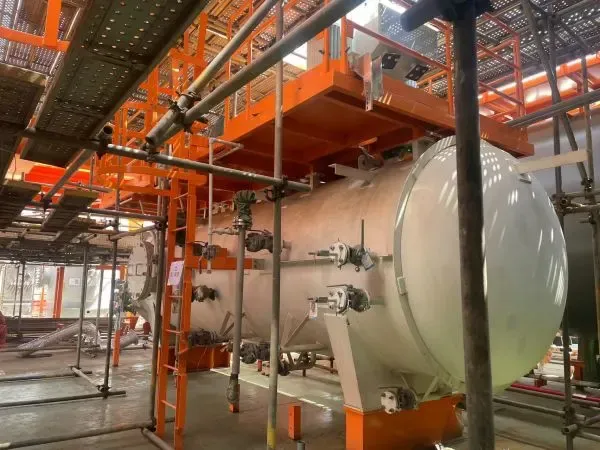
Electrostatic coalescers are designed to enhance the natural separation process by applying a high-voltage electric field to crude oil-water emulsions. When the emulsion passes through the coalescer vessel, the electric field induces polarization in dispersed water droplets. This causes the droplets to align, attract each other, and merge into larger droplets.
As droplet size increases, the gravitational force acting on them becomes stronger than the stabilizing forces that keep them suspended in oil. This allows the enlarged water droplets to settle more quickly at the bottom of the separator vessel, where they can be removed efficiently.
Unlike purely mechanical separation methods, electrostatic coalescers actively modify the behavior of the emulsion at the microscopic level. This fundamental difference is what makes them highly effective in improving crude oil dehydration efficiency, especially in challenging emulsions with fine water dispersion.
Electrostatic coalescers improve crude oil dehydration efficiency through several interconnected mechanisms that work together to enhance separation performance.
Acceleration of Droplet Coalescence
One of the primary advantages of electrostatic treatment is the rapid coalescence of fine water droplets. In untreated emulsions, these droplets remain stable for long periods due to interfacial tension and stabilizing agents. The electric field disrupts this stability and forces droplets to merge. This significantly reduces the time required for phase separation, allowing operators to achieve higher throughput in separation vessels.
Improved Separation of Stable Emulsions
Certain crude oils contain heavy fractions and natural surfactants that create highly stable emulsions, which are difficult to break using conventional gravity separators or heat treatment alone. Electrostatic coalescers provide additional energy input that overcomes these stabilizing forces. This makes them particularly valuable in heavy oil production and offshore processing environments where emulsion stability is typically higher.
Reduction in Chemical Demulsifier Usage
Chemical demulsifiers are commonly used to assist water separation in crude oil processing. However, excessive chemical usage increases operational costs and may create downstream processing challenges. By improving natural coalescence mechanisms, electrostatic coalescers reduce the dependency on chemical additives. This not only lowers operating expenses but also supports more environmentally responsible production practices.
Enhanced Separator Throughput and Capacity
When water droplets coalesce more efficiently, the overall separation process becomes faster and more compact. This allows separators equipped with electrostatic coalescers to handle higher production volumes without requiring significant increases in equipment size. Operators benefit from improved throughput and better utilization of existing infrastructure.
Better Crude Oil Quality and Pipeline Transportability
Efficient dehydration leads to lower water content in crude oil, which directly improves its quality and market value. Reduced water content also minimizes corrosion risks in pipelines and storage tanks. This contributes to safer and more cost-effective transportation of crude oil over long distances.
Operational Considerations for Maximum Performance
Although electrostatic coalescers offer significant advantages, their performance depends on proper system design and operational control. Engineers must carefully consider factors such as electric field strength, residence time, temperature, and crude oil composition to achieve optimal results.
For example, insufficient electric field intensity may lead to incomplete coalescence, while excessive voltage can cause re-emulsification in some cases. Similarly, temperature control plays an important role because viscosity reduction at higher temperatures can enhance droplet mobility and improve separation efficiency.
Operators must also ensure regular maintenance of internal components to prevent fouling, which can reduce the effectiveness of the electric field distribution. A well-designed monitoring system allows real-time adjustments to maintain stable dehydration performance under varying feed conditions.
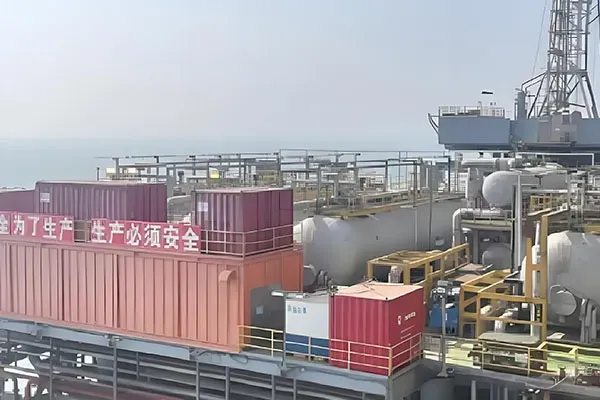
Electrostatic coalescers are widely used across upstream production facilities, offshore platforms, and onshore separation plants. They are particularly valuable in fields where crude oil contains high water cuts or forms tight emulsions that are difficult to separate using conventional methods.
In offshore environments, where space and weight are limited, electrostatic coalescers provide a compact and efficient solution for dehydration. In onshore facilities, they contribute to higher processing capacity and reduced chemical consumption, improving overall operational economics.
The technology also supports enhanced oil recovery operations, where produced fluids often contain complex emulsions due to chemical flooding or thermal recovery methods. In these scenarios, electrostatic coalescers help maintain stable production quality and reduce processing bottlenecks.
Electrostatic coalescers play a crucial role in improving crude oil dehydration efficiency by actively enhancing the coalescence of water droplets within emulsions. Their ability to accelerate separation, reduce chemical usage, and improve overall system capacity makes them an essential technology in modern oil production and processing.
As the oil and gas industry continues to demand higher efficiency, lower costs, and more sustainable operations, electrostatic coalescer systems will remain a key solution for optimizing crude oil treatment processes. Companies that invest in advanced dehydration technologies not only improve operational performance but also strengthen their competitiveness in a rapidly evolving energy market.
Electrostatic Coalescer for Produced Water Treatment: Benefits Explored
2026-09-21 01:29How to Size an Electrostatic Coalescer for Your Production Rate
2026-09-14 01:29Zhengyuan Petrochemical Proudly Announces ABS PDA Certification for Copper-Nickel Alloy Pipe Fittings
2026-09-11 02:28Comparing AC vs. DC Electrostatic Coalescers for Water Removal
2026-09-07 01:29Address: No. 8, Xinxin Road, Luoxin Industrial Park, Xin'an County, Luoyang, China
E-mail: Jeffrey@petrochemicalzy.com
Phone: +8615896509239

Zhengyuan Petrochemical
Create the greatest value for customers
Provide the best quality products and services
+8615896509239
Jeffrey@petrochemicalzy.com
No. 8, Xinxin Road, Luoxin Industrial Park, Xin'an County, Luoyang, China
 WhatsApp