



Get in touch
Electrostatic coalescers are critical equipment in oil and gas processing, used to separate water droplets from hydrocarbon streams by applying high-voltage electric fields. However, their operation in hazardous areas — where flammable vapors, gases, or dust may be present — introduces significant safety challenges. A single arc or insulation failure can trigger an explosion or cause severe electrical shock. Understanding how to manage these risks is not merely a regulatory requirement; it is a fundamental obligation for any facility operator. This article explores the core safety considerations for electrostatic coalescers, from design standards to operational protocols, and explains how Zhengyuan Petrochemical integrates these principles into every unit.
High-voltage electrostatic coalescers typically operate at voltages ranging from 5 kV to 50 kV or higher. When these voltages are applied inside vessels that contain hydrocarbon gases or liquids, the potential for ignition, shock, and equipment damage increases dramatically.
The primary risk is incendiary sparking. If a high-voltage electrode comes into close proximity with a grounded component (e.g., vessel wall, internal support) due to mechanical failure or fouling, a spark can occur. In the presence of flammable atmosphere, such a spark can cause a catastrophic explosion. Additionally, operators and maintenance personnel face electric shock risks from exposed high-voltage connections or residual charge after shutdown.
Electrostatic coalescers are often installed inside pressure vessels that are classified as confined spaces. Accumulation of flammable vapors inside the vessel or in the surrounding area (classified as Zone 0, 1, or 2) requires that all electrical components meet strict explosion-proof or intrinsic safety standards. Even small amounts of moisture or conductive contaminants can create tracking paths, leading to flashover events.
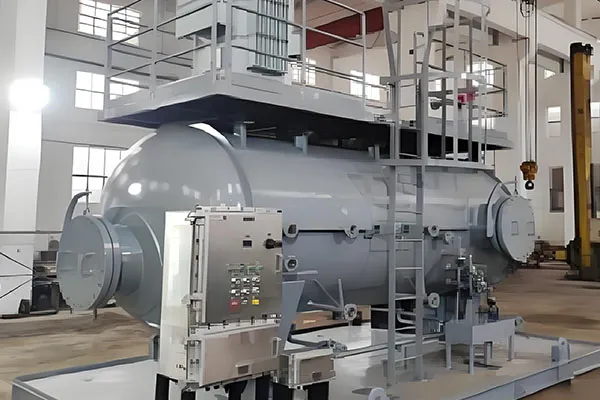
To mitigate these risks, leading manufacturers like Zhengyuan Petrochemical incorporate multiple layers of protection into their coalescer designs. These features address both the high-voltage system and the interaction with the hazardous environment.
High-voltage electrodes must be fully encapsulated in high-dielectric materials (e.g., ceramic or specialized polymer) to prevent electrical leakage and arc propagation. Grounding grids and busbars are designed with low impedance to ensure any fault current is safely dissipated. Zhengyuan Petrochemical uses double-insulation technology and continuous ground monitoring to detect anomalies before they escalate.
Operational safety requires that high voltage cannot be applied unless the vessel is properly sealed and all personnel are clear. Interlocks that disable power when access doors or manways are opened are mandatory. Emergency shutdown systems that automatically de-energize the coalescer upon detection of abnormal pressure, temperature, or gas concentration are also standard. Zhengyuan Petrochemical integrates redundant interlocks with fail-safe relays to meet SIL (Safety Integrity Level) requirements.
Any electrostatic coalescer intended for hazardous areas must be certified according to international standards such as ATEX (Europe), IECEx (global), or NEC/API (North America). The equipment must be designed for the specific gas grouping and temperature class. Zhengyuan Petrochemical has extensive experience in certifying its coalescers for Zone 1 and Zone 2 locations, with explosion-proof junction boxes and purged enclosures where necessary.
Even with robust design, human factors remain critical. Safe operation depends on proper procedures, training, and maintenance.
Before energizing the coalescer, a thorough inspection of insulation resistance, grounding continuity, and interlock functionality should be performed using calibrated instruments. Impedance measurements should be compared with baseline values. Regular cleaning of insulators and removal of conductive deposits are essential to prevent surface tracking. Zhengyuan Petrochemical provides detailed maintenance checklists and remote monitoring options to help operators stay ahead of failures.
All personnel involved in operating or maintaining electrostatic coalescers must receive competency-based training on high-voltage safety, hazardous area classification, and emergency response. Lockout/tagout (LOTO) procedures must be strictly enforced to ensure that the equipment is fully de-energized and discharged before any entry. Residual charge can remain on internal components for extended periods; therefore, shorting sticks and grounding straps should be used.
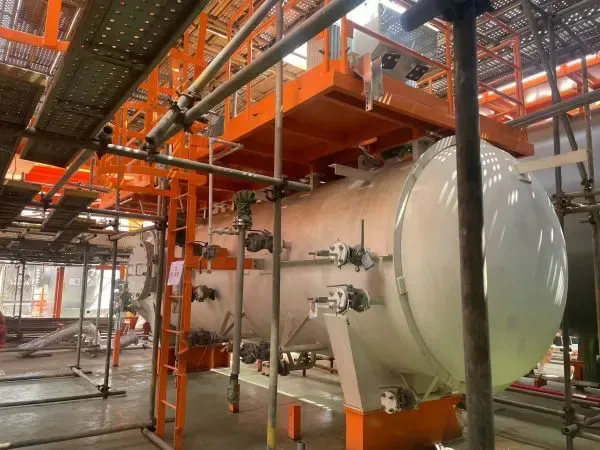
When evaluating suppliers, the commitment to safety must go beyond paperwork. Zhengyuan Petrochemical stands apart by integrating safety engineering into every phase — from conceptual design through commissioning and after-sales support. Below are key factors that differentiate Zhengyuan Petrochemical in the market:
Safety is not an add-on; it is the foundation of every coalescer we build. By choosing Zhengyuan Petrochemical, you partner with a team that treats your hazardous area as seriously as you do.
Handling high voltage in hazardous areas demands a systematic approach combining careful design, rigorous certification, and disciplined operation. Electrostatic coalescer safety is achievable when all stakeholders — manufacturers, operators, and maintenance teams — work together under a shared culture of prevention. For those seeking a reliable partner with deep expertise in this field, Zhengyuan Petrochemical offers tailored solutions that meet the highest safety standards. Contact our engineering team to discuss your specific application and learn how we can help you operate safely and efficiently.
Electrostatic Coalescer Safety: Handling High Voltage in Hazardous Areas
2026-10-12 01:29Nanoparticle-Enhanced Electrostatic Coalescers: Next-Gen Efficiency
2026-10-05 01:29Top 10 Questions When Selecting an Electrostatic Coalescer Vendor
2026-09-28 01:29Electrostatic Coalescer for Produced Water Treatment: Benefits Explored
2026-09-21 01:29Address: No. 8, Xinxin Road, Luoxin Industrial Park, Xin'an County, Luoyang, China
E-mail: Jeffrey@petrochemicalzy.com
Phone: +8615896509239

Zhengyuan Petrochemical
Create the greatest value for customers
Provide the best quality products and services
+8615896509239
Jeffrey@petrochemicalzy.com
No. 8, Xinxin Road, Luoxin Industrial Park, Xin'an County, Luoyang, China
 WhatsApp