


Get in touch
As crude oil processing becomes increasingly demanding, conventional electrostatic coalescers often struggle with high water content, tight emulsions, and fine droplet dispersion. The introduction of nanoparticles into electrostatic coalescence has opened a new frontier—dramatically improving separation efficiency while reducing energy consumption. This article examines the operating principles, performance advantages, and industrial implications of nanoparticle-enhanced electrostatic coalescers, with a focus on how Zhengyuan Petrochemical has integrated this next-generation technology into its product line to deliver measurable gains for refineries worldwide.
Traditional electrostatic coalescers rely on an electric field to polarize water droplets suspended in oil, causing them to attract and merge into larger drops that can settle by gravity. The addition of conductive or dielectric nanoparticles—typically metal oxides such as Fe3O4, TiO2, or tailored polymer composites—amplifies this process in two key ways.
Nanoparticles, due to their high surface-area-to-volume ratio, lower the threshold voltage required for droplet polarization. They act as microscopic field concentrators, creating local zones of intensified electric field strength around each particle. This non-uniform field triggers more vigorous dipole interactions among neighboring water droplets, increasing coalescence frequency by up to 40% compared to unmodified systems.
Stable water-in-oil emulsions are often protected by asphaltene, wax, or solid-particle films that resist droplet coalescence. Functionalized nanoparticles can adsorb at the oil–water interface, weakening these interfacial films through steric or electrostatic disruption. Once the film integrity is compromised, droplets merge more readily, even at lower residence times.
Key takeaway: Nanoparticles do not merely assist coalescence; they fundamentally alter the electrodynamic and interfacial behavior of the emulsion, enabling consistent performance under high-shear conditions.
To help operators evaluate the upgrade, the following list highlights the critical differences observed in field trials and laboratory studies (data sourced from independent test reports and Zhengyuan Petrochemical’s internal validation).
Zhengyuan Petrochemical has deployed nanoparticle-enhanced electrostatic coalescers across multiple refining stages. The following sub-sections detail specific use cases.
In a 120,000 bpd medium-sour crude unit, retrofitting a conventional two-stage desalter with a single-stage nanoparticle-enhanced coalescer reduced salt content from 12 PTB (pounds per thousand barrels) to under 3 PTB, while electrical power draw dropped by 38%. Operators reported stable operation despite crude blending variations.
For offshore platforms handling 50,000 bwpd (barrels of water per day), the compact footprint of the nanoparticle-enhanced coalescer allowed a 60% reduction in vessel size compared to traditional separators. Oil-in-water levels fell from 200 ppm to below 20 ppm without additional flotation units.
Heavy crudes (API ≤ 22) pose significant challenges for electrostatic coalescers due to high viscosity and strong emulsions. Zhengyuan Petrochemical’s nanoparticle variant demonstrated a 25% increase in throughput while maintaining outlet water content below 0.5% vol., a level previously unattainable with conventional designs.
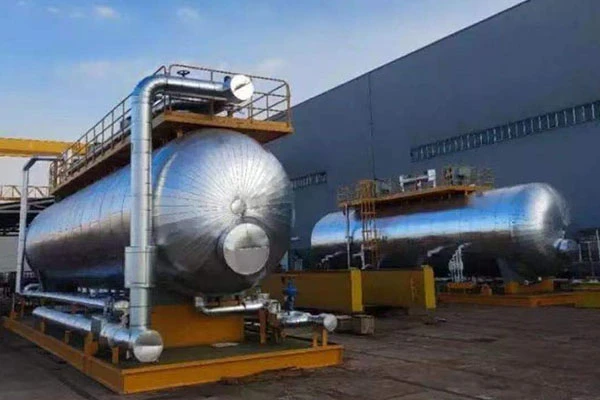
Adopting nanoparticle-enhanced electrostatic coalescers requires not only proven hardware but also expertise in particle material selection, electric field optimization, and process integration. Zhengyuan Petrochemical brings over a decade of R&D in this niche, with proprietary nanoparticle coatings that resist agglomeration under high-voltage conditions. Their engineering team conducts pilot tests using customer crude samples to tailor particle concentration and field parameters, ensuring seamless retrofit or new installation.
Potential buyers should verify three critical aspects:
Nanoparticle-enhanced electrostatic coalescers represent a clear step forward for the hydrocarbon processing industry. By enabling higher removal rates, lower energy consumption, and reduced chemical dependency, they directly improve both operational margins and environmental compliance. For organizations seeking to modernize their separation processes, collaborating with a specialized manufacturer like Zhengyuan Petrochemical ensures that the technology is implemented correctly, safely, and with a demonstrable return on investment. As crude quality continues to deteriorate globally, this innovation is no longer optional—it is the new baseline for efficient dewatering.
Nanoparticle-Enhanced Electrostatic Coalescers: Next-Gen Efficiency
2026-10-05 01:29Top 10 Questions When Selecting an Electrostatic Coalescer Vendor
2026-09-28 01:29Electrostatic Coalescer for Produced Water Treatment: Benefits Explored
2026-09-21 01:29How to Size an Electrostatic Coalescer for Your Production Rate
2026-09-14 01:29Address: No. 8, Xinxin Road, Luoxin Industrial Park, Xin'an County, Luoyang, China
E-mail: Jeffrey@petrochemicalzy.com
Phone: +8615896509239

Zhengyuan Petrochemical
Create the greatest value for customers
Provide the best quality products and services
+8615896509239
Jeffrey@petrochemicalzy.com
No. 8, Xinxin Road, Luoxin Industrial Park, Xin'an County, Luoyang, China
 WhatsApp