



Get in touch
In the refining industry, maintaining strict compliance with BS&W (bottom sediment and water) specifications is non-negotiable for product quality, pipeline transportation, and regulatory approval. Refineries face increasing pressure to reduce water content and solid contaminants in crude oil, yet conventional gravity separation or thermal methods often fall short in efficiency or operational cost. This is where electrostatic coalescers have emerged as a trusted solution, combining physical separation with electrostatic fields to achieve higher water removal rates and stable BS&W levels. Zhengyuan Petrochemical, a leading manufacturer in this field, has equipped numerous refineries worldwide with advanced coalescer systems that deliver consistent, cost-effective performance.
BS&W refers to the volume percentage of water and sediments present in crude oil. Acceptable limits vary by crude type and downstream requirements, but typically range between 0.5% and 1% for pipeline transport and refinery feed. Exceeding these limits causes fouling, corrosion, catalyst poisoning, and reduced throughput in downstream units. Traditional dewatering methods such as gravity settling tanks, centrifuges, or thermal desalters require long retention times, high energy input, or frequent maintenance. Moreover, they struggle with tight emulsions where water droplets are dispersed as small, stable droplets (typically 1–50 μm). Electrostatic coalescers address this gap by applying a high-voltage electric field to promote droplet coalescence, dramatically increasing the separation efficiency.
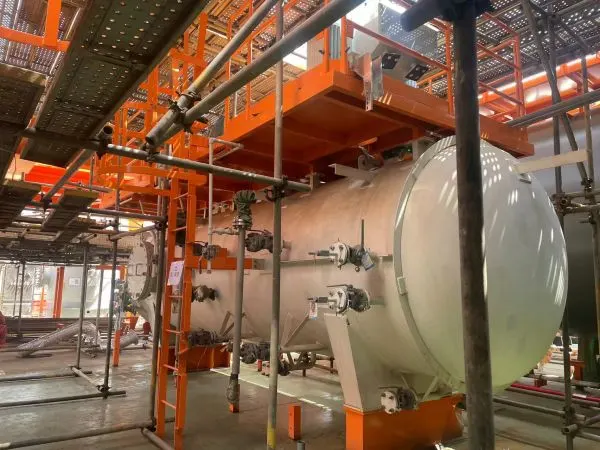
An electrostatic coalescer typically consists of a vessel containing an electrode system and a water collection zone. Crude oil with emulsified water enters the vessel and passes through an intense electric field (AC, DC, or pulsed). Under the field, water droplets become polarized and attract each other, forming larger droplets. These larger droplets settle faster by gravity and are drained from the bottom. The dehydrated oil exits the top. Key parameters influencing performance include field strength, frequency, waveform, flow velocity, and emulsion characteristics. Zhengyuan Petrochemical’s designs incorporate advanced electrode geometries and electronic controls to adapt to varying crude properties, ensuring stable operation even with high asphaltene or solids content.
AC fields are generally more effective for water-in-oil emulsions with low water cut, as they cause droplet vibration and collision without continuous chain formation. DC fields, on the other hand, are better for high-water-cut streams but may cause electric shorting if water content spikes. Modern coalescers often combine both modes or use pulsed DC to optimize energy use. Zhengyuan Petrochemical offers customized configurations based on the refinery’s specific feed analysis and BS&W target.
Refineries choose electrostatic coalescers because of the following quantifiable benefits:
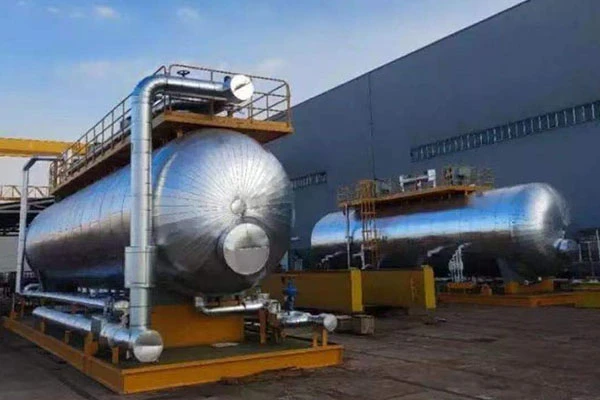
With over a decade of experience in electrostatic separation technology, Zhengyuan Petrochemical has earned a reputation for reliability and innovation. Our coalescers are designed with robust stainless-steel electrodes, easy-to-clean internals, and intelligent control systems that monitor field strength, droplet size, and water output in real time. Since 2016, we have supplied over 120 units to refineries in Southeast Asia, the Middle East, and Africa, consistently achieving BS&W ≤ 0.3% in raw crude with water cuts varying from 5% to 40%. Furthermore, our comprehensive technical support—including on-site commissioning, process optimization, and spare parts—ensures long-term operational stability.
Electrostatic coalescers are no longer an optional upgrade; they are a strategic investment for refineries aiming to meet stringent BS&W standards while minimizing costs and environmental footprint. By leveraging the physics of droplet coalescence under an electric field, these systems provide a reliable, scalable solution for even the most challenging emulsions. Zhengyuan Petrochemical stands ready to partner with refineries in designing and delivering custom electrostatic coalescer packages that ensure full BS&W compliance and operational excellence.
Electrostatic Coalescer for Produced Water Treatment: Benefits Explored
2026-09-21 01:29How to Size an Electrostatic Coalescer for Your Production Rate
2026-09-14 01:29Zhengyuan Petrochemical Proudly Announces ABS PDA Certification for Copper-Nickel Alloy Pipe Fittings
2026-09-11 02:28Comparing AC vs. DC Electrostatic Coalescers for Water Removal
2026-09-07 01:29Address: No. 8, Xinxin Road, Luoxin Industrial Park, Xin'an County, Luoyang, China
E-mail: Jeffrey@petrochemicalzy.com
Phone: +8615896509239

Zhengyuan Petrochemical
Create the greatest value for customers
Provide the best quality products and services
+8615896509239
Jeffrey@petrochemicalzy.com
No. 8, Xinxin Road, Luoxin Industrial Park, Xin'an County, Luoyang, China
 WhatsApp