Get in touch
Learn how an electrostatic coalescer promotes water droplet coalescence for crude oil separation. Zhengyuan provides process design, equipment, electrodes, power supplies and separator retrofits, with project experience on offshore platforms and FPSOs.
Contact Us
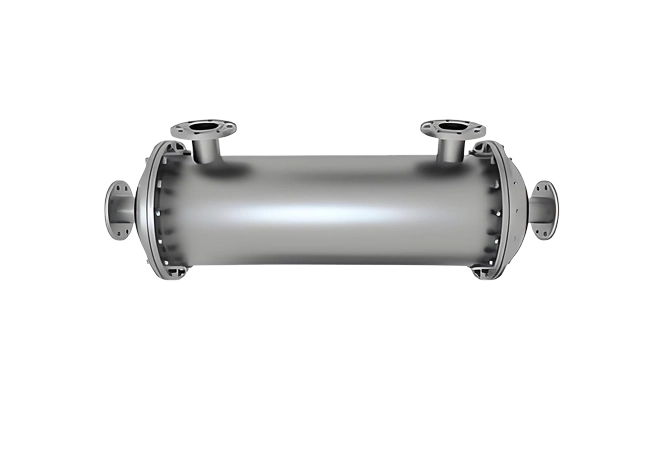
An electrostatic coalescer uses an electric field to promote the merging of dispersed water droplets in crude oil. This process, known as electrostatic coalescence, forms larger droplets that can separate more readily under gravity. It can be applied within crude oil dehydration and desalting systems, with the configuration selected for the treatment duty.
Luoyang Zhengyuan Petrochemical designs and manufactures crude oil treatment equipment, with field experience on offshore platforms and FPSOs as well as onshore oilfields. We supply complete equipment and skid-mounted systems, as well as electrodes and power supplies. Our services include process design, equipment selection and retrofits to existing separators, with overseas installation guidance, commissioning, training and remote technical support.
For equipment selection, see our Crude Oil Electrostatic Dehydrator. For integrated treatment systems, see our Desalting and Dehydration Packages.
How does an electrostatic coalescer work? In a water-in-oil emulsion, small water droplets can remain dispersed in the continuous oil phase. Their small size and the stability of the emulsion can make gravity separation difficult.
Electrostatic coalescence assists the process in three steps:
Under the assumptions of Stokes' law, droplet settling velocity increases with the square of droplet diameter. This helps explain why droplet growth assists separation, but it is not a complete sizing method for an operating vessel.
The electric field assists coalescence; the overall result also depends on fluid properties, vessel hydraulics and the available separation time. The system must therefore be evaluated as part of the complete crude treatment process. Electrical configuration and operating settings are selected for the application rather than assumed suitable for every crude oil.
An electrostatic coalescer should be evaluated against the actual feed and treatment duty. Important inputs include:
Water content, BS&W and salt content must be defined separately in the design basis. A result demonstrated in one field application does not establish a performance guarantee for a different crude or process configuration.
Electrostatic coalescer sizing starts with the required liquid throughput and separation duty. The assessment also considers the available treatment volume, droplet growth and settling, flow distribution and the arrangement of electrode internals. Flow rate alone is not sufficient to select a vessel or define a retrofit.
Zhengyuan's experience includes collaborative development with CNOOC Research Institute and field applications of electrostatic coalescence in crude oil dehydration. Our patent portfolio includes electrostatic coalescence separation equipment, electrode sealing arrangements and multistage separation equipment incorporating pulse technology.
We support overseas projects through:
For electrostatic coalescer internals and component enquiries, specify whether the requirement concerns electrodes, power supplies or a retrofit to an existing separator. Where drawings and operating data are available, they help define the supply boundaries and interfaces for review.
The equipment configuration, supply boundaries and service arrangements are agreed for each project.
See our Technology Patents and Company Qualifications for supporting information.
Offshore separator retrofits: electrostatic coalescence can be assessed as part of a separator upgrade where additional water separation is required. Existing vessel geometry, internals, electrical arrangements and operating constraints must be reviewed.
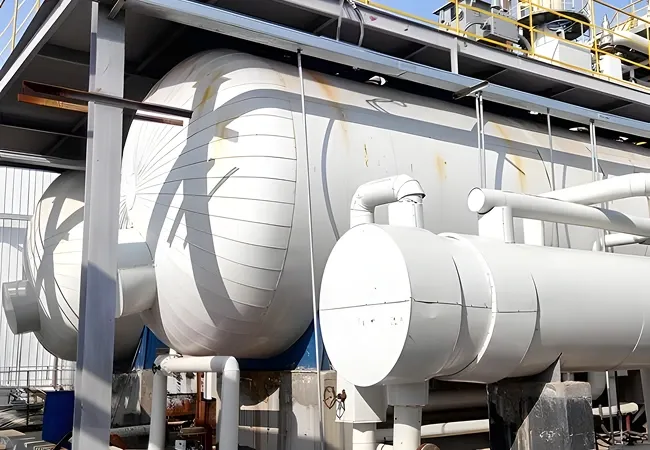
Offshore platforms and FPSOs: project assessment considers the treatment duty alongside available installation space, weight limits, electrical supply, existing interfaces and access for maintenance. These inputs help define a suitable equipment or retrofit scope; they are not assumed performance advantages for every installation.
Crude oil dehydration systems: coalescence technology can form part of a treatment train designed around the required downstream oil specification.
High-water-content heavy-oil treatment: feed viscosity, temperature and emulsion behaviour require particular attention. Bulk water removal in a field separation stage should not be confused with final export-oil dehydration or refinery desalting.
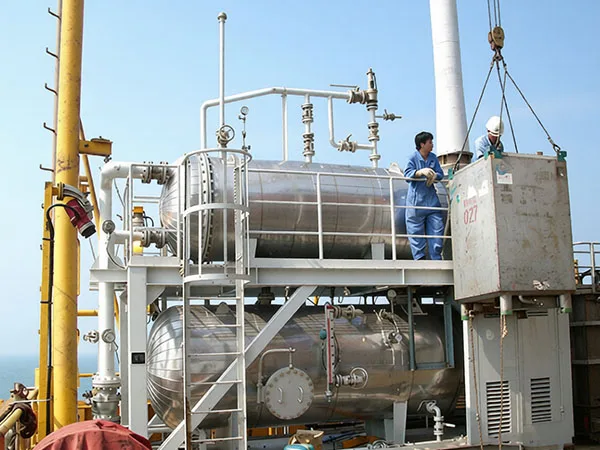
Electrostatic coalescence technology was applied in a retrofit to secondary separator B at the Weizhou 12-1 PUQB offshore platform. Under the comparison conditions documented in the application statement, with inlet crude water content of approximately 35%, outlet water content decreased from 15% before energization to 2% after energization. A separate operating test documented treatment of the full liquid stream at 13,500 cubic metres per day, with outlet oil water content remaining within 3%.
These observations relate to the conditions described in the project statement and are not a general product guarantee.
Zhengyuan supplied electrostatic coalescer equipment for the Pengbo FPSO low-pressure separator conversion project. The project acceptance review records that the work met the contractual requirements for scope, technical assessment, quality and schedule.
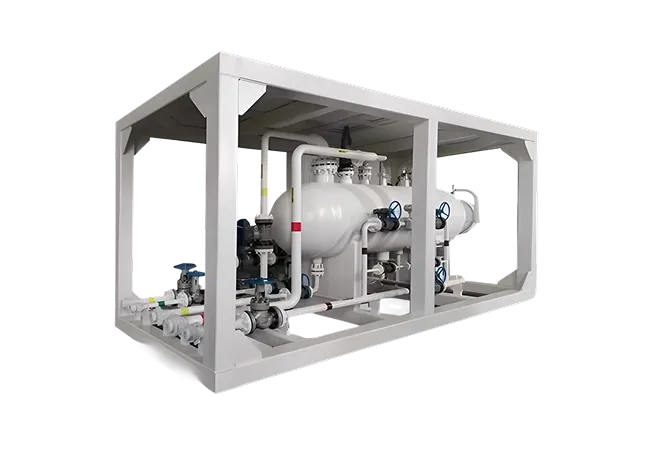
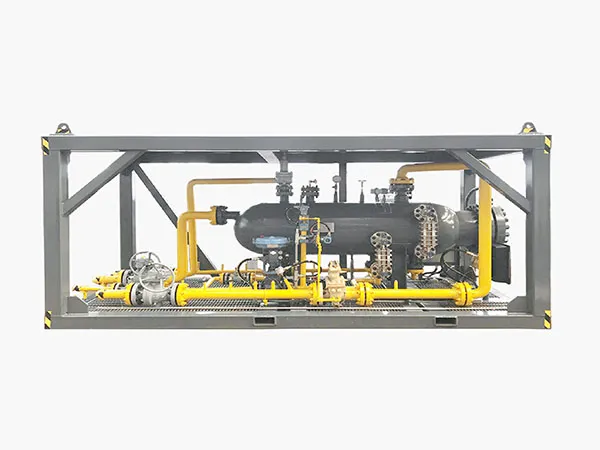
Zhengyuan's international project references include an electrostatic dehydration skid for the Kingfisher Oilfield project in Uganda. The project illustrates the company's overseas crude oil treatment equipment experience, alongside its offshore platform and FPSO separator retrofit references.
Send your available process data or project RFQ to discuss a new system, individual components or a separator retrofit. Useful information includes flow rate, crude oil properties, inlet water and solids content, operating pressure and temperature, required outlet specification, installation location and constraints on space or weight.
If complete data is not yet available, describe the current separation problem and provide the information you have.
For offshore platforms and FPSOs, indicate whether the project is a new installation or retrofit and include available equipment drawings, space and weight limits, electrical supply and interface requirements.

Zhengyuan Petrochemical
Create the greatest value for customers
Provide the best quality products and services
+8615896509239
Jeffrey@petrochemicalzy.com
No. 8, Xinxin Road, Luoxin Industrial Park, Xin'an County, Luoyang, China
 WhatsApp