


Get in touch
Industrial facilities that discharge process wastewater containing oil and grease face strict limits under the U.S. Environmental Protection Agency (EPA). Exceeding those limits can result in fines, permit violations, and environmental harm. Oil water separators are the primary treatment technology used to remove free and dispersed oil, helping plants meet EPA wastewater limits consistently. But not all separators are equal. Design, sizing, maintenance, and monitoring all determine whether a system achieves compliance. Zhengyuan Petrochemical has extensive experience in engineering oil water separators that deliver reliable performance under real-world conditions. This article explains how these systems work, what EPA limits typically apply, and what it takes to keep your discharge within legal boundaries.
The EPA regulates industrial wastewater discharges under the Clean Water Act through the National Pollutant Discharge Elimination System (NPDES) permit program. For oil and grease (O&G), many permits set a daily maximum of 100 mg/L and a monthly average of 50 mg/L. However, these limits are not universal. They vary by industry category, receiving water body, and local pretreatment standards. For example, facilities in petroleum refining, metal finishing, and food processing often face stricter limits or additional requirements for total suspended solids (TSS), chemical oxygen demand (COD), and toxic pollutants.
Compliance is not just about meeting a single number. Permits may specify sampling frequency, analytical methods, and reporting deadlines. A single exceedance can trigger enforcement action. Therefore, oil water separators must be designed with a margin of safety and operated to handle variable influent conditions. Understanding your specific permit limits is the first step. The second is selecting a separator that can reliably achieve those limits.
Most oil water separators rely on gravity separation. Oil is less dense than water, so it rises. But rising is not instantaneous. The rate at which an oil droplet rises depends on its size and the difference in density, as described by Stokes' Law. Larger droplets rise faster. Smaller droplets, especially those below 20 microns, rise very slowly and may not separate in a simple gravity separator.
To overcome this, modern separators incorporate coalescing media. As wastewater flows through a coalescing plate pack or media, small oil droplets collide and merge into larger ones. These larger droplets then rise to the surface, where they are skimmed off. The remaining water exits the system. This process can reduce effluent oil concentrations to well below EPA limits.
There are several types of oil water separators:
Each type has trade-offs in cost, space, and performance. The right choice depends on your wastewater characteristics and discharge limits.
Achieving EPA wastewater limits requires more than just a tank. Several design features directly influence oil removal efficiency and operational reliability.
Separators must be sized to handle peak flow without turbulence that re-entrains oil. Undersized units allow oil to escape. Oversized units are costly and may suffer from short-circuiting. A qualified engineer calculates the required surface area based on flow rate, oil droplet size, and temperature. Zhengyuan Petrochemical uses advanced modeling to size each separator for the specific application.
Coalescing media increase the effective surface area for oil droplet collisions. The media type, plate spacing, and angle all matter. Stainless steel plates resist corrosion; polypropylene media are lighter and cheaper but may degrade with certain chemicals. Regular cleaning is essential to prevent plugging.
Once oil reaches the surface, it must be removed promptly. Weirs, skimmers, and decanters are common. A well-designed skimmer adjusts to varying oil layer thicknesses without removing excess water. Some systems use belt skimmers or tube skimmers for continuous removal. The goal is to keep the oil layer thin so that it does not emulsify back into the water.
Solids can clog coalescing media and reduce performance. Many separators include a grit chamber or sludge hopper. For high-solids waste streams, pretreatment such as screening or sedimentation is recommended. Zhengyuan Petrochemical often integrates solids removal into the separator design to minimize maintenance.
Even the best-designed separator will fail if not maintained. EPA compliance requires ongoing attention. Key tasks include:
Automation can help. Level sensors, flow meters, and online oil-in-water analyzers provide real-time data. But technology does not replace trained operators. Zhengyuan Petrochemical offers training and service contracts to help facilities stay compliant.
Selecting a separator involves several factors:
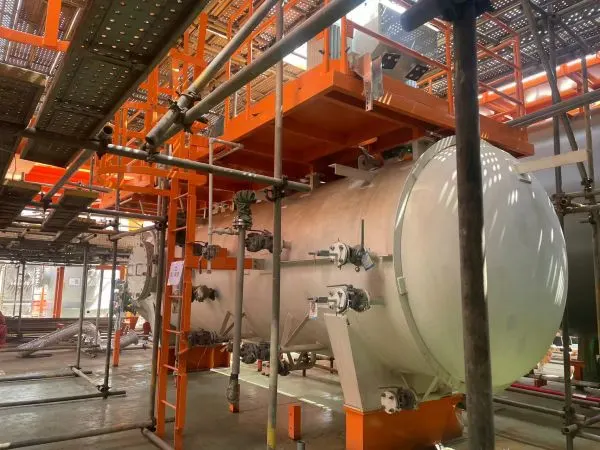
Zhengyuan Petrochemical works with each client to evaluate these factors and recommend a system that meets EPA limits without over-engineering. Their separators are built for durability and ease of maintenance, with options for coalescing plates, DAF, and integrated controls.
Many NPDES permits set a daily maximum of 100 mg/L and a monthly average of 50 mg/L. However, limits can be lower or higher depending on your industry and location. Always check your specific permit.
Inspect weekly and remove oil as needed. Clean coalescing media quarterly or when pressure drop increases. Conduct a full internal inspection annually. High-load applications may require more frequent service.
No. Standard separators remove free and dispersed oil. Dissolved oil requires advanced treatment such as activated carbon, biological treatment, or membrane filtration. If your permit limits dissolved oil, you may need a multi-stage system.
Exceedances can lead to fines, mandatory reporting, additional sampling, and in severe cases, criminal penalties. It is far more cost-effective to maintain compliance than to remediate violations.
Meeting EPA wastewater limits is a legal obligation and a mark of responsible operations. Oil water separators are the workhorses of oil removal, but their performance depends on proper design, sizing, and maintenance. By understanding the regulations, selecting the right technology, and committing to regular service, facilities can avoid penalties and protect the environment. Zhengyuan Petrochemical provides end-to-end support—from assessment and custom engineering to ongoing maintenance—so your discharge stays within limits. For facilities that treat oily wastewater, investing in a compliant separator is not just a regulatory requirement; it is a smart operational decision.
How Oil Water Separators Meet EPA Wastewater Limits
2026-10-26 01:29From Lab to Field: Scaling Electrostatic Coalescer Technology
2026-10-19 01:29Electrostatic Coalescer Safety: Handling High Voltage in Hazardous Areas
2026-10-12 01:29Nanoparticle-Enhanced Electrostatic Coalescers: Next-Gen Efficiency
2026-10-05 01:29Address: No. 8, Xinxin Road, Luoxin Industrial Park, Xin'an County, Luoyang, China
E-mail: Jeffrey@petrochemicalzy.com
Phone: +8615896509239

Zhengyuan Petrochemical
Create the greatest value for customers
Provide the best quality products and services
+8615896509239
Jeffrey@petrochemicalzy.com
No. 8, Xinxin Road, Luoxin Industrial Park, Xin'an County, Luoyang, China
 WhatsApp