


Get in touch
The journey from a controlled laboratory setting to a robust industrial field deployment is the ultimate test for any advanced separation technology. Electrostatic coalescence, a method proven to significantly enhance the separation of water-in-oil emulsions, has long held promise. However, its successful scaling requires meticulous engineering, material science innovation, and a deep understanding of real-world process conditions. This article examines the critical factors in scaling electrostatic coalescer technology, highlighting how Zhengyuan Petrochemical bridges the gap between theoretical efficacy and operational reliability for demanding oil & gas and petrochemical applications.
Electrostatic coalescers work by applying a high-voltage electric field to a flowing emulsion. Water droplets, being polar, are attracted and polarized, causing them to collide and merge into larger droplets that can settle by gravity. In the lab, ideal conditions (stable emulsion, single droplet size, uniform flow) are easy to maintain.
Scaling this to field scale introduces key challenges: non-uniform electric field distribution, variable emulsion properties, and potential arcing or short-circuiting due to conductive water bridges. Zhengyuan Petrochemical's design approach addresses these by optimizing electrode geometry and using advanced insulation materials to maintain field strength across large volumes while preventing electrical breakdown.
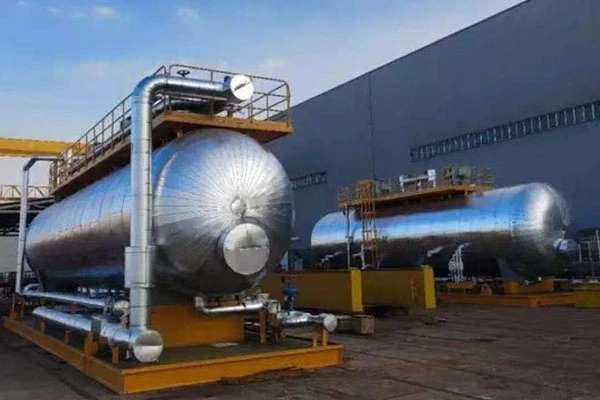
In the field, crude oil and produced water emulsions vary in water cut, salt content, viscosity, and droplet size distribution. A lab recipe often fails under such conditions. Zhengyuan Petrochemical integrates adaptive control algorithms that adjust voltage and frequency in real-time based on feedback from conductivity sensors and flow meters. This ensures optimal coalescence efficiency even when the emulsion quality fluctuates.
Industrial vessels must withstand high pressure (up to 150 bar), temperature extremes, and corrosive environments. Standard lab glassware is replaced by carbon steel or stainless steel lined with high-dielectric-strength ceramic or polymer coatings. Zhengyuan Petrochemical's electrostatic coalescer vessels use proprietary electrode supports that minimize vibration and maintain precise inter-electrode spacing under thermal expansion.
Flow distribution across a large diameter vessel is critical. Bypass flow or dead zones can reduce separation efficiency. Computational fluid dynamics (CFD) modeling is used to design inlet distributors and baffles that ensure plug flow with minimal turbulence. Zhengyuan Petrochemical's field-proven designs achieve an average water removal efficiency exceeding 95% at design throughput, compared to 85-90% for conventional mechanical separators.
To justify scaling, the technology must deliver measurable benefits over traditional methods such as gravity settling, hydrocyclones, or chemical demulsifiers.
One notable example involves a Middle Eastern onshore oil field processing a medium-crude with 30% water cut and high asphaltene content. After lab trials showed 92% separation in a benchtop unit, a full-scale 5000 bbl/day electrostatic coalescer was installed. Over 18 months of operation, the unit consistently delivered 99.2% water removal, reduced chemical costs by 65%, and maintained stable performance despite varying production rates. The key was a robust electrode cleaning mechanism that prevented fouling.
Scaling electrostatic coalescer technology from lab to field is not merely a matter of 'making things bigger.' It requires an integrated approach combining electrical engineering, fluid dynamics, material durability, and process control. Zhengyuan Petrochemical's successful track record demonstrates that with proper engineering, this technology can deliver substantial operational and economic advantages. For operators seeking to debottleneck separation trains, reduce chemical usage, or improve product quality, the electrostatic coalescer presents a mature, scalable solution ready for the most demanding environments.
From Lab to Field: Scaling Electrostatic Coalescer Technology
2026-10-19 01:29Electrostatic Coalescer Safety: Handling High Voltage in Hazardous Areas
2026-10-12 01:29Nanoparticle-Enhanced Electrostatic Coalescers: Next-Gen Efficiency
2026-10-05 01:29Top 10 Questions When Selecting an Electrostatic Coalescer Vendor
2026-09-28 01:29Address: No. 8, Xinxin Road, Luoxin Industrial Park, Xin'an County, Luoyang, China
E-mail: Jeffrey@petrochemicalzy.com
Phone: +8615896509239

Zhengyuan Petrochemical
Create the greatest value for customers
Provide the best quality products and services
+8615896509239
Jeffrey@petrochemicalzy.com
No. 8, Xinxin Road, Luoxin Industrial Park, Xin'an County, Luoyang, China
 WhatsApp