



Get in touch
In many industrial processes involving liquids, the behavior of droplets plays a decisive role in determining efficiency, product quality, and system stability. Among the advanced techniques used to control droplet interactions, high voltage electric fields have emerged as a powerful method to influence droplet coalescence in a precise and controllable way. This technology is widely applied in areas such as oil-water separation, chemical processing, electrostatic spraying, fuel purification, and even emerging microfluidic systems.
Understanding how high voltage electric fields affect droplet coalescence is not only important for improving existing industrial systems, but also for developing next-generation separation and mixing technologies. As industries demand higher efficiency and lower energy consumption, the ability to manipulate droplets using electrostatic forces has become a critical research and engineering topic.
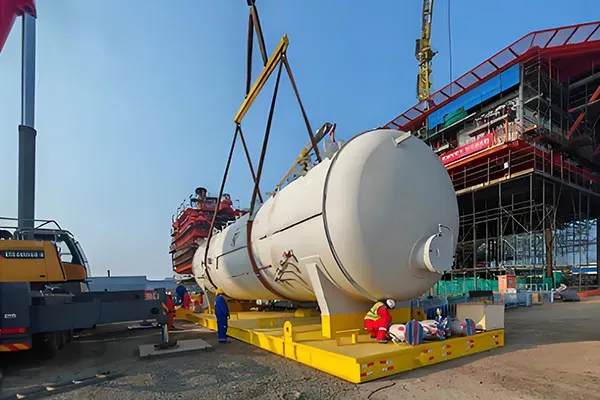
Droplet coalescence refers to the process in which two or more individual liquid droplets merge into a single larger droplet. Under normal conditions, this process is governed primarily by surface tension, viscosity, and external flow dynamics. However, when a high voltage electric field is introduced, the interaction mechanism changes significantly.
When a droplet is exposed to an electric field, charges within the liquid redistribute. This phenomenon induces polarization, causing one side of the droplet to become positively charged while the opposite side becomes negatively charged. As a result, droplets begin to behave like induced dipoles.
If two polarized droplets approach each other, the electric field generates an attractive force between opposite charges. This electrostatic attraction can overcome the natural repulsive forces caused by surface tension or interfacial films, allowing droplets to merge more easily. In many cases, the electric field also deforms droplets, elongating them along the field direction and increasing the contact area between neighboring droplets. This deformation further accelerates the coalescence process.
Influence of Electric Field Strength on Coalescence Efficiency
The strength of the applied electric field plays a decisive role in determining the efficiency of droplet coalescence. At low field strengths, polarization effects remain weak, and droplets may only experience slight deformation without significant merging behavior. As the voltage increases, the induced dipole moment becomes stronger, and attractive electrostatic forces begin to dominate.
However, when the electric field becomes excessively strong, it may lead to undesirable effects such as droplet breakup or secondary atomization. This phenomenon occurs when electrostatic stress overcomes surface tension, causing droplets to elongate excessively and fragment into smaller droplets instead of coalescing. Therefore, industrial systems must carefully balance electric field intensity to achieve optimal coalescence without destabilizing the droplet system.
Role of Dielectric Properties and Conductivity
The dielectric properties and electrical conductivity of the liquid also significantly influence how droplets respond to high voltage fields. Conductive liquids tend to redistribute charge more rapidly, which enhances polarization and strengthens inter-droplet attraction. In contrast, low-conductivity or insulating liquids respond more slowly, often requiring higher voltage levels to achieve the same degree of coalescence.
In multiphase systems such as oil-water emulsions, the contrast in dielectric properties between phases becomes particularly important. The electric field preferentially polarizes droplets of one phase, leading to selective coalescence and separation. This principle is widely used in electrostatic desalting and dehydration processes in the petroleum industry.
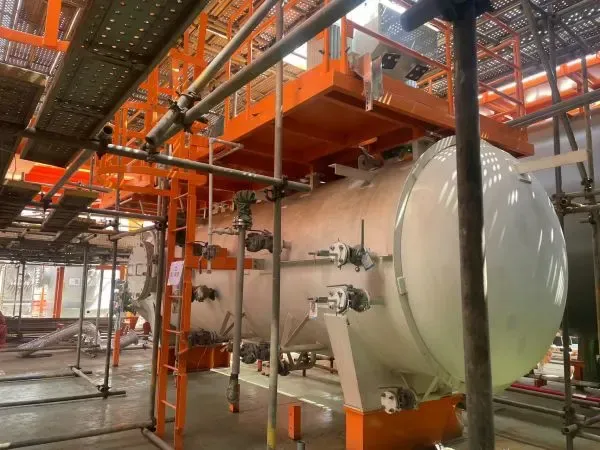
The practical applications of droplet coalescence under high voltage electric fields span across multiple industries.
Oil-Water Separation Systems
In petroleum processing, crude oil often contains dispersed water droplets that must be removed before refining. High voltage electrostatic coalescers are widely used to accelerate the merging of water droplets into larger clusters. Once the droplets grow in size, gravity separation becomes more efficient, significantly improving dehydration performance and reducing energy consumption.
Chemical and Process Engineering
Many chemical processes involve emulsions where precise control of droplet size is essential. Electric field-induced coalescence allows engineers to control reaction environments, improve phase separation, and enhance product purity. This is especially valuable in solvent extraction and liquid-liquid reaction systems.
Fuel Treatment and Purification
In aviation and automotive fuel systems, water contamination can cause serious performance and safety issues. Electrostatic coalescence systems help remove fine water droplets from fuels, ensuring cleaner combustion and reducing engine wear.
Environmental and Wastewater Treatment
Advanced wastewater treatment systems increasingly use electric field technologies to remove oil droplets and suspended emulsions. By enhancing droplet coalescence, treatment facilities can achieve higher separation efficiency without relying heavily on chemical additives.
Engineering Design Considerations
Designing systems that utilize high voltage electric fields for droplet coalescence requires careful consideration of multiple factors. Engineers must evaluate electrode configuration, field uniformity, flow conditions, and material compatibility.
Electrode design plays a particularly important role in ensuring uniform field distribution. Uneven fields can lead to localized breakdown or inefficient coalescence zones. Additionally, the spacing between electrodes must be optimized to balance energy consumption and performance.
Flow dynamics also interact with electric field effects. In continuous systems, droplet residence time within the field region determines the likelihood of coalescence. If the flow rate is too high, droplets may not remain in the active field long enough to merge effectively.
Challenges and Limitations
Despite its advantages, high voltage electric field technology for droplet coalescence is not without challenges. One major limitation is the risk of electrical discharge or arcing in systems operating at very high voltages. This can damage equipment and reduce operational stability.
Another challenge lies in handling complex emulsions with varying droplet sizes and compositions. In such systems, uniform coalescence is more difficult to achieve because different droplets respond differently to the same electric field conditions.
Energy efficiency is also an important concern. While electric field systems can reduce chemical usage and mechanical separation requirements, they still require stable high-voltage power supplies, which must be optimized for industrial scalability.
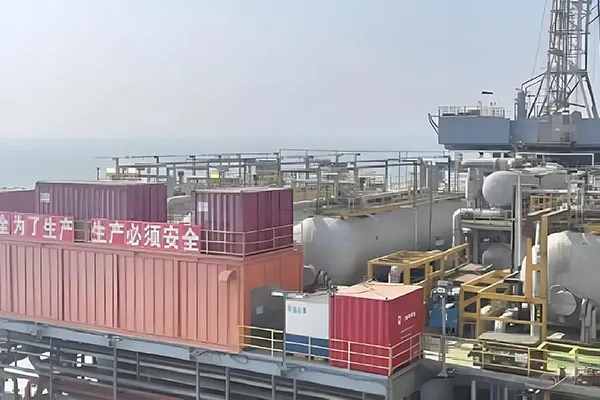
As industrial demand for efficient separation and micro-scale fluid control continues to grow, research into electric field-driven droplet coalescence is expected to expand further. Future developments are likely to focus on improving energy efficiency, enhancing control precision, and integrating smart monitoring systems.
The combination of high voltage electric fields with real-time sensing technologies and AI-based control systems may allow adaptive optimization of coalescence processes. This would enable systems to automatically adjust voltage levels and flow conditions based on real-time droplet behavior.
In addition, advancements in materials science may lead to more durable electrode materials and insulation systems, improving safety and extending equipment lifespan.
High voltage electric fields play a crucial role in enhancing droplet coalescence by inducing polarization, generating electrostatic attraction, and modifying droplet dynamics. This technology has already demonstrated significant value in industries such as oil-water separation, chemical processing, fuel purification, and environmental engineering.
By carefully controlling electric field strength, system design, and fluid properties, engineers can achieve highly efficient droplet coalescence processes that reduce energy consumption and improve operational performance. As research continues to evolve, electric field-based droplet manipulation is expected to become an even more important tool in modern fluid engineering and industrial separation technologies.
Ultimately, the integration of high voltage electric field technology represents a key step toward more intelligent, efficient, and sustainable fluid processing systems in the future.Electrostatic Coalescer Safety: Handling High Voltage in Hazardous Areas
2026-10-12 01:29Nanoparticle-Enhanced Electrostatic Coalescers: Next-Gen Efficiency
2026-10-05 01:29Top 10 Questions When Selecting an Electrostatic Coalescer Vendor
2026-09-28 01:29Electrostatic Coalescer for Produced Water Treatment: Benefits Explored
2026-09-21 01:29Address: No. 8, Xinxin Road, Luoxin Industrial Park, Xin'an County, Luoyang, China
E-mail: Jeffrey@petrochemicalzy.com
Phone: +8615896509239

Zhengyuan Petrochemical
Create the greatest value for customers
Provide the best quality products and services
+8615896509239
Jeffrey@petrochemicalzy.com
No. 8, Xinxin Road, Luoxin Industrial Park, Xin'an County, Luoyang, China
 WhatsApp