



Get in touch
Gravity separators have long been a workhorse in oil-water treatment, relying on density differences to separate immiscible fluids. However, as production fluids become more complex—with tighter emulsions, finer solids, and higher throughput demands—the inherent limitations of gravity-based separation become increasingly apparent. An electrostatic coalescer upgrade can dramatically improve separation performance, reduce chemical consumption, and extend equipment life. But how do you know when it is time to make the switch? The following five signs indicate that your gravity separator is no longer sufficient and that an electrostatic coalescer from Zhengyuan Petrochemical could be the solution you need.
If your treated water repeatedly exceeds discharge or reinjection specifications for oil content, your gravity separator is likely struggling. Gravity separators are effective for free oil droplets larger than 100–150 microns, but they cannot efficiently capture smaller droplets or emulsified oil. An electrostatic coalescer applies a high-voltage electric field that forces dispersed water droplets to coalesce into larger droplets, which then settle rapidly in the downstream gravity section. Zhengyuan Petrochemical's electrostatic coalescers can reduce oil-in-water content to below 20 ppm even with inlet concentrations exceeding 500 ppm, providing reliable compliance.
When an electric field is applied across an oil-continuous flow, water droplets become polarized, attract each other, and merge. The resulting larger droplets have a much higher settling velocity, overcoming the limitations of Stokes' law that constrain gravity separators. This technology is particularly effective for tight emulsions that resist chemical demulsifiers.
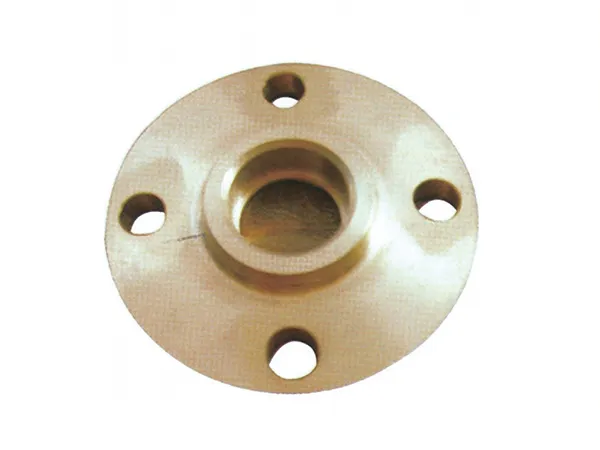
A gradual increase in pressure drop across the separator, or a need to reduce flow rate to maintain separation quality, indicates internal fouling or inadequate separation area. Solids buildup and rag layers accumulate over time, reducing active volume. Electrostatic coalescers are typically designed with minimal internals and self-cleaning features. Zhengyuan Petrochemical offers coalescer systems that operate with negligible pressure drop while handling flow surges up to 120% of design capacity without compromising outlet quality.
If your facility is injecting increasing amounts of demulsifier, heat, or flocculant to break emulsions, the operating cost may already justify an upgrade. Electrostatic coalescence reduces or eliminates the need for chemical additives because the electric field alone destabilizes the emulsion. In many field installations, Zhengyuan Petrochemical clients have reported cutting demulsifier usage by more than 70% after retrofitting, with corresponding reductions in sludge disposal and downstream fouling.
A 50,000 bbl/day facility spending $200,000 annually on demulsifier can save $140,000 per year. The electrostatic coalescer upgrade typically pays for itself within 12 to 24 months, not counting reduced maintenance and improved oil recovery.
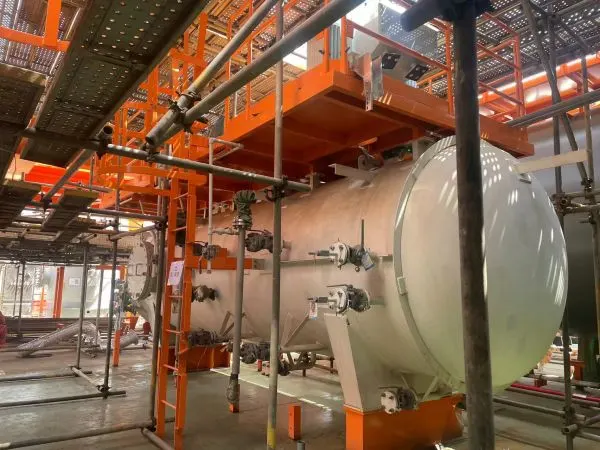
If your team has to shut down the gravity separator every few weeks to remove oil sludge, sand, or rag layer, the downtime is costing you production. Gravity separators are susceptible to solids accumulation, especially when influent contains fines that settle slowly. Electrostatic coalescers designed by Zhengyuan Petrochemical incorporate optimized inlet distributors and coalescence grids that minimize fouling. Some designs include internal wash-water or scraper mechanisms to extend cleaning intervals from weeks to months.
Consider a separator that requires 8 hours of cleaning every two weeks: that is 4% downtime per year. At a production value of $50,000 per hour, annual lost revenue exceeds $1 million. An upgrade reduces cleaning frequency by 80%, recovering most of that lost time.
Oil fields naturally mature: water cut increases, API gravity drops, and emulsions become tighter. If your gravity separator was designed for lighter crude and now struggles with heavy oil or high water cut, its fixed geometry cannot adapt. Electrostatic coalescers are less sensitive to viscosity and density changes because the coalescence mechanism relies on electrical forces rather than buoyancy alone. Zhengyuan Petrochemical offers modular coalescer units that can be retrofitted into existing vessels or installed as standalone skids, providing flexibility to handle a wide range of feed properties without re-engineering the entire system.
Recognizing these five signs early can prevent costly failures and environmental penalties. While a gravity separator may have served your operation well for years, the demands of modern production often exceed its capabilities. An electrostatic coalescer upgrade from Zhengyuan Petrochemical addresses each of these limitations with proven technology, field-tested reliability, and custom engineering support. Evaluate your separator's performance against these indicators, and contact Zhengyuan for a feasibility assessment tailored to your specific process conditions.
From Lab to Field: Scaling Electrostatic Coalescer Technology
2026-10-19 01:29Electrostatic Coalescer Safety: Handling High Voltage in Hazardous Areas
2026-10-12 01:29Nanoparticle-Enhanced Electrostatic Coalescers: Next-Gen Efficiency
2026-10-05 01:29Top 10 Questions When Selecting an Electrostatic Coalescer Vendor
2026-09-28 01:29Address: No. 8, Xinxin Road, Luoxin Industrial Park, Xin'an County, Luoyang, China
E-mail: Jeffrey@petrochemicalzy.com
Phone: +8615896509239

Zhengyuan Petrochemical
Create the greatest value for customers
Provide the best quality products and services
+8615896509239
Jeffrey@petrochemicalzy.com
No. 8, Xinxin Road, Luoxin Industrial Park, Xin'an County, Luoyang, China
 WhatsApp