



Get in touch
Electrostatic coalescers are critical equipment in the oil and gas industry for removing water from crude oil emulsions. Two primary technologies dominate the market: alternating current (AC) and direct current (DC) electrostatic coalescers. Choosing between them can significantly impact operational efficiency, capital expenditure, and maintenance requirements. This article provides an in-depth, technical comparison to help engineers and decision-makers select the optimal solution for their specific dehydration needs. Drawing on decades of field experience, Zhengyuan Petrochemical offers proven expertise in both technologies, ensuring reliable and cost-effective water removal systems.
Both AC and DC coalescers operate on the same basic principle: applying an electric field to a water-in-oil emulsion to polarize water droplets, causing them to coalesce into larger droplets that settle more rapidly. The electric field strength, frequency, and waveform determine the efficiency of droplet agglomeration. However, the two approaches differ significantly in how they generate and apply the electric field, leading to distinct performance characteristics.
AC systems use a high-voltage alternating field, typically 50/60 Hz, to induce dipole-dipole attraction between water droplets. The oscillating field continuously reorients droplets, promoting collisions. AC is particularly effective for breaking relatively stable emulsions with moderate water content. One key advantage is that AC fields can be applied directly to the process without requiring complex electrode gap control, as the alternating polarity reduces the risk of electrical shorting through conductive water chains.
DC systems apply a constant unidirectional electric field, often with voltages ranging from 10 kV to 50 kV. The steady field creates a strong attraction between oppositely charged droplets and aligns them into chains. DC is generally more effective for high-water-content emulsions (above 5-10%) and for treating very fine droplets. However, DC systems are more prone to electrical shorting if water accumulates on electrodes, requiring careful design of insulation and electrode spacing.
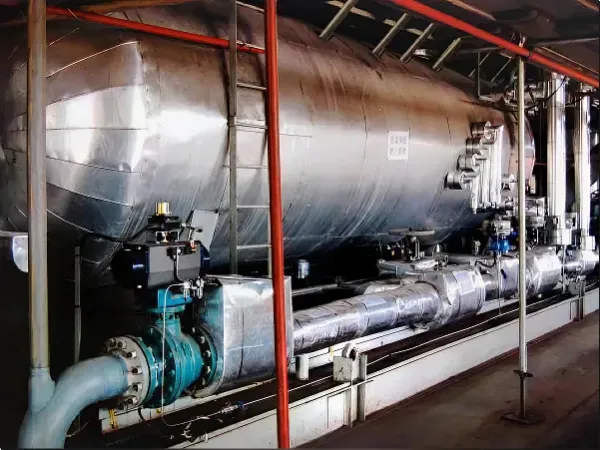
To facilitate your equipment selection, the table below highlights the critical differences between the two technologies across multiple evaluation criteria.
| Parameter | AC Coalescer | DC Coalescer |
|---|---|---|
| Best suited for | Low to moderate water content (below 5%) | Higher water content (5-20%) and fine emulsions |
| Droplet coalescence efficiency | Good for bulk water removal; less effective for sub-10 micron droplets | Excellent for sub-micron droplets; higher overall separation efficiency |
| Operational stability | More tolerant of water slugs; less short-circuit risk | Requires stable flow; risk of arcing with conductive bridges |
| Power consumption | Lower (typically 20-30% less than DC) | Higher due to continuous field generation |
| Maintenance | Simpler electrode design; longer intervals between cleaning | More frequent electrode cleaning; insulation degradation over time |
| Capital cost | Generally lower | Higher (requires precision components and insulation) |
| Typical applications | Crude oil dehydration, refinery desalting, fuel treatment | Mineral oil dehydration, high-BS&W streams, chemical processing |
When deciding between AC and DC coalescers, consider these three factors:
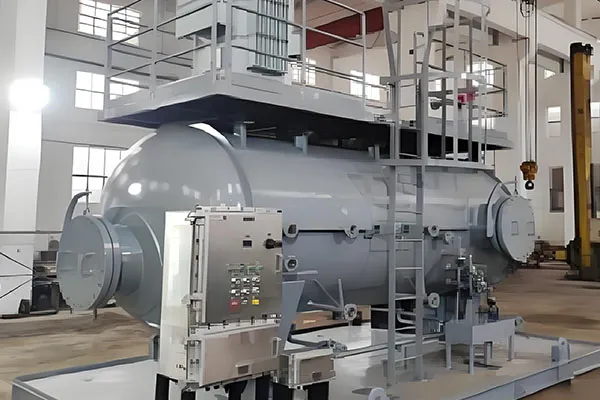
With over a decade of experience in electrostatic separation, Zhengyuan Petrochemical supplies both AC and DC coalescers, customized to client specifications. Our engineers perform a detailed emulsion analysis before recommending the optimal technology. For example, we recently helped a Middle Eastern refinery reduce water content from 15% to 0.3% using a hybrid AC/DC arrangement that combines the stability of AC with the polishing efficiency of DC. All our coalescers are built with robust insulation, corrosion-resistant electrodes, and intelligent control systems to maximize uptime.
Yes, with modifications to the power supply and electrode system. Zhengyuan Petrochemical offers conversion kits for many models, but the cost often approaches that of a new DC unit, so we recommend a full lifecycle cost analysis first.
AC typically consumes less electricity and requires less frequent electrode cleaning, resulting in 15-25% lower annual operating costs for typical crude dehydration.
If your current AC coalescer cannot achieve the target water content (e.g., below 0.5%) or you experience frequent electrical trips, a DC or hybrid solution may be necessary. We offer free pilot testing to confirm.
The choice between AC and DC electrostatic coalescers hinges on your specific emulsion properties, process stability, and economic constraints. AC coalescers offer simplicity, lower cost, and robust operation for moderate water removal. DC coalescers deliver superior separation of fine droplets and handle high water cuts effectively. By partnering with an experienced supplier like Zhengyuan Petrochemical, you gain access to unbiased technical guidance, field-proven designs, and complete after-sales support. Contact our experts today for a custom evaluation of your dehydration needs.
From Lab to Field: Scaling Electrostatic Coalescer Technology
2026-10-19 01:29Electrostatic Coalescer Safety: Handling High Voltage in Hazardous Areas
2026-10-12 01:29Nanoparticle-Enhanced Electrostatic Coalescers: Next-Gen Efficiency
2026-10-05 01:29Top 10 Questions When Selecting an Electrostatic Coalescer Vendor
2026-09-28 01:29Address: No. 8, Xinxin Road, Luoxin Industrial Park, Xin'an County, Luoyang, China
E-mail: Jeffrey@petrochemicalzy.com
Phone: +8615896509239

Zhengyuan Petrochemical
Create the greatest value for customers
Provide the best quality products and services
+8615896509239
Jeffrey@petrochemicalzy.com
No. 8, Xinxin Road, Luoxin Industrial Park, Xin'an County, Luoyang, China
 WhatsApp