



Get in touch
In the evolving landscape of the oil and gas industry, produced water management is no longer a secondary operational concern—it has become a central pillar of environmental compliance, cost optimization, and sustainable development. As we move into 2026, stricter discharge regulations, water scarcity issues, and increasing ESG (Environmental, Social, and Governance) expectations are pushing operators to rethink how produced water is treated and reused. Among the available technologies, oil-water separators continue to play a foundational role, acting as the first line of defense in separating hydrocarbons from water streams.
Produced water is an inevitable byproduct of oil and gas extraction. It typically contains a complex mixture of dispersed oil droplets, dissolved hydrocarbons, suspended solids, heavy metals, and chemical additives used during drilling and production. The composition can vary significantly depending on reservoir conditions, extraction methods, and field maturity.
In mature oilfields, water cut can exceed 80–90%, meaning that operators are handling far more water than oil. This shift places enormous pressure on treatment systems, both in terms of capacity and efficiency. Simply put, without reliable separation technologies, downstream treatment processes become less effective and more expensive.
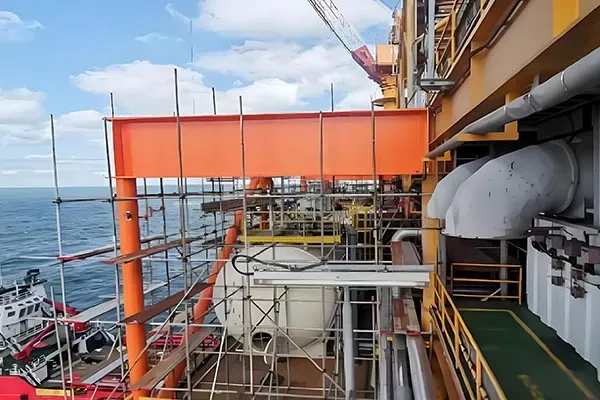
Despite the emergence of advanced filtration systems and membrane technologies, oil-water separators remain indispensable. Their primary function is to remove free and dispersed oil from produced water before it undergoes further treatment or disposal.
In 2026, their importance is amplified for several reasons:
Regulatory Pressure: Discharge standards are becoming increasingly stringent worldwide. Many regions now require oil-in-water concentrations to be reduced to below 10–20 ppm before discharge or reinjection.
Operational Efficiency: Removing oil early in the process reduces fouling in downstream equipment such as membranes and biological treatment systems.
Cost Reduction: Efficient separation lowers chemical consumption and maintenance costs across the treatment chain.
Resource Recovery: Separated oil can often be recovered and reintroduced into the production stream, improving overall yield.
Modern produced water treatment systems typically incorporate several types of separators, each designed for specific operating conditions.
1. Gravity Separators (API Separators)
These are among the oldest and most widely used systems. They rely on the natural density difference between oil and water to achieve separation. While simple and cost-effective, their efficiency is limited when dealing with smaller oil droplets.
2. Corrugated Plate Interceptors (CPI) and Parallel Plate Separators (PPI)
By increasing the surface area and reducing the distance oil droplets must travel, these systems enhance separation efficiency compared to traditional gravity units. They are commonly used in onshore facilities where space is constrained.
3. Hydrocyclones
Hydrocyclones use centrifugal force to separate oil from water. They are particularly effective for offshore platforms due to their compact design and ability to handle high flow rates. In 2026, improved designs have enhanced their performance in removing smaller النفط droplets.
4. Induced Gas Flotation (IGF) Units
These systems introduce gas bubbles that attach to oil droplets, causing them to float to the surface for removal. IGF units are often used as a secondary treatment stage after primary separation.
5. Enhanced Coalescers
Advanced coalescing media are increasingly used to promote the aggregation of fine oil droplets, making them easier to separate. New materials in 2026 offer higher efficiency and longer service life.
Oil-water separation technology has seen significant innovation in recent years, driven by digitalization and material science.
Smart Monitoring Systems: Real-time sensors now allow operators to monitor oil concentration, flow rates, and separator performance continuously. This enables predictive maintenance and process optimization.
Advanced Materials: New coalescing media and anti-fouling coatings improve separation efficiency while reducing downtime.
Compact Modular Designs: Skid-mounted systems are becoming more popular, allowing for easier installation and scalability, especially in remote or offshore environments.
Integration with AI and Automation: Automated control systems can adjust operating parameters dynamically, ensuring optimal performance under varying conditions.
While oil-water separators are essential, their performance depends heavily on proper design, operation, and maintenance. Common challenges include:
Emulsified Oil: Stable emulsions are difficult to break and often require chemical treatment or additional processing stages.
Variable Flow Conditions: Fluctuating production rates can impact separator efficiency if not properly managed.
Space Constraints: Offshore platforms and compact facilities require highly efficient systems within limited footprints.
Maintenance Requirements: Fouling and scaling can reduce efficiency over time if not addressed proactively.
To address these challenges, operators in 2026 are increasingly adopting hybrid systems that combine multiple separation technologies, ensuring higher overall treatment performance.
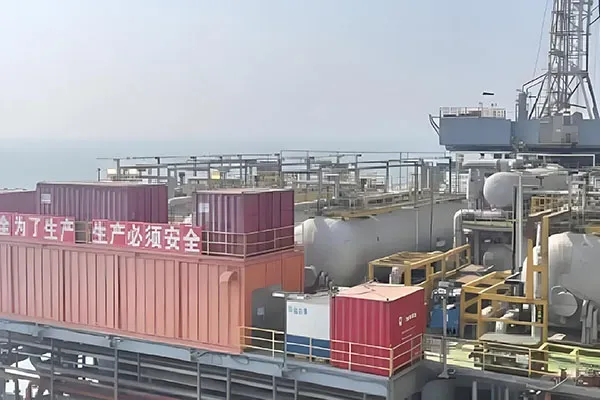
One of the most significant trends in 2026 is the shift toward water reuse. Instead of treating produced water solely for disposal, many operators are upgrading treatment systems to enable reuse in:
Enhanced oil recovery (EOR)
Hydraulic fracturing
Industrial processes
Agricultural applications (after advanced treatment)
Oil-water separators are a critical first step in these reuse strategies, ensuring that downstream systems can operate effectively and meet quality requirements.
As environmental standards tighten and operational demands increase, produced water treatment is becoming a strategic priority for oil and gas companies worldwide. In this context, oil-water separators remain a cornerstone technology, providing the essential first step in removing hydrocarbons and enabling efficient downstream treatment.
Looking ahead, the integration of advanced materials, smart monitoring, and modular design will continue to enhance separator performance. However, the key to success lies not only in adopting new technologies but also in selecting the right system configuration based on specific operational needs.
For companies aiming to improve efficiency, reduce costs, and meet sustainability targets in 2026, investing in high-performance oil-water separation solutions is not just an option—it is a necessity.
How to Size an Electrostatic Coalescer for Your Production Rate
2026-09-14 01:29Zhengyuan Petrochemical Proudly Announces ABS PDA Certification for Copper-Nickel Alloy Pipe Fittings
2026-09-11 02:28Comparing AC vs. DC Electrostatic Coalescers for Water Removal
2026-09-07 01:29Electrostatic Coalescer Electrode Fouling: Prevention and Cleaning
2026-08-31 01:29Address: No. 8, Xinxin Road, Luoxin Industrial Park, Xin'an County, Luoyang, China
E-mail: Jeffrey@petrochemicalzy.com
Phone: +8615896509239

Zhengyuan Petrochemical
Create the greatest value for customers
Provide the best quality products and services
+8615896509239
Jeffrey@petrochemicalzy.com
No. 8, Xinxin Road, Luoxin Industrial Park, Xin'an County, Luoyang, China
 WhatsApp