



Get in touch
In highly demanding industrial environments, heat exchangers are not merely auxiliary components within a system; they are critical assets that directly influence production efficiency, operational safety, energy consumption, and long-term maintenance costs. When the working environment involves seawater, chloride-rich solutions, acidic fluids, or elevated temperatures and pressures, conventional materials often struggle to maintain structural integrity over time. Under such conditions, a titanium alloy heat exchanger becomes a strategic investment rather than a simple equipment upgrade.
This comprehensive guide explores how to select the most suitable titanium alloy heat exchanger for your application, offering a structured framework that combines material science, thermal engineering, lifecycle cost evaluation, and industry-specific considerations. By understanding these factors in depth, decision-makers can avoid costly mistakes and ensure long-term operational reliability.
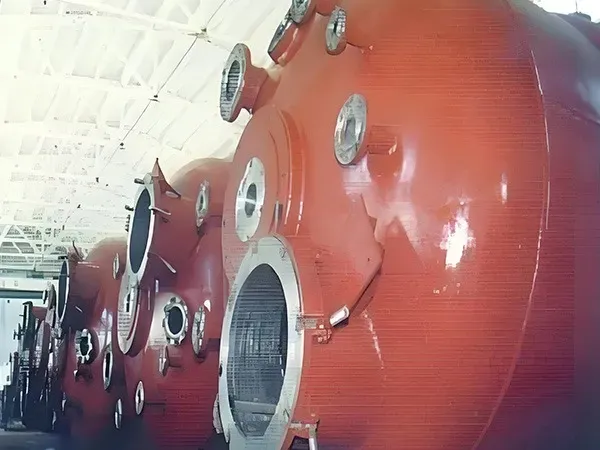
Titanium alloys have earned their reputation in harsh industrial sectors because of their exceptional resistance to corrosion, particularly in chloride-containing and seawater environments where stainless steel often suffers from pitting or stress corrosion cracking. The key to titanium’s durability lies in the formation of a dense and stable oxide film on its surface, which acts as a natural protective barrier against aggressive media. This passive layer regenerates automatically if damaged, providing continuous protection without additional coatings.
Beyond corrosion resistance, titanium alloys offer an impressive strength-to-weight ratio, allowing for thinner walls without compromising structural integrity. This characteristic enhances heat transfer efficiency while reducing overall equipment weight, which can be particularly beneficial in offshore platforms, marine vessels, and compact industrial installations. Additionally, titanium demonstrates strong resistance to erosion, cavitation, and fatigue under cyclic thermal loading, making it highly suitable for long-term continuous operation.
Although the initial procurement cost may be higher than that of carbon steel or certain stainless steel grades, titanium alloy heat exchangers often outperform alternative materials in lifecycle cost analysis. Reduced downtime, minimal corrosion-related failures, and extended service life contribute to lower total cost of ownership over decades of operation.
Step 1: Defining Operating Conditions with Precision
Selecting an appropriate titanium alloy heat exchanger begins with a thorough assessment of operating parameters. Many performance issues originate from incomplete analysis during the early design phase. Therefore, it is essential to examine fluid properties, temperature ranges, pressure ratings, and flow characteristics in detail.
When dealing with seawater cooling systems, desalination facilities, or chemical processing plants, the chloride concentration and potential scaling behavior must be evaluated carefully. High-velocity fluids may increase erosion risks, while stagnant zones could accelerate localized corrosion if the design is not optimized for uniform flow distribution.
Thermal parameters such as inlet and outlet temperatures, required heat duty, and acceptable pressure drop must be calculated accurately to determine the necessary heat transfer area. Oversizing can lead to unnecessary capital expenditure and operational inefficiency, whereas undersizing may cause unstable performance and production interruptions. A precise thermal design ensures that the exchanger operates within its optimal efficiency window while maintaining mechanical reliability.
Step 2: Selecting the Appropriate Heat Exchanger Configuration
Titanium alloy heat exchangers are available in multiple structural configurations, each offering distinct advantages depending on the application environment and maintenance strategy.
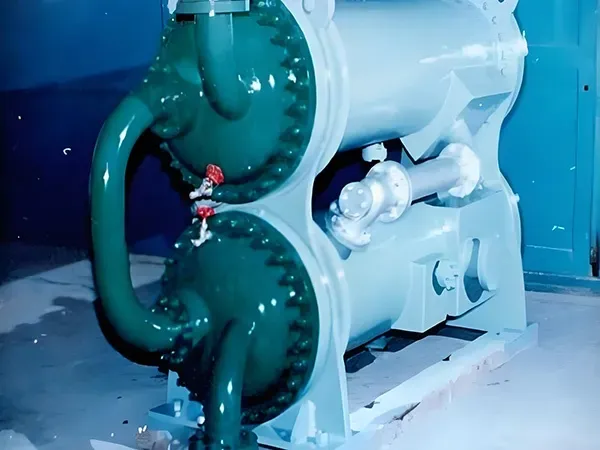
Shell and tube heat exchangers remain a dominant choice in heavy industrial sectors due to their mechanical robustness and adaptability to high-pressure conditions. Their modular design allows for tube bundle replacement and easier cleaning procedures, which is particularly valuable in environments prone to fouling.
Plate heat exchangers provide a compact solution with high thermal efficiency and rapid heat transfer due to their large surface area-to-volume ratio. They are often selected for applications where space constraints are significant or where precise temperature control is required. However, plate designs may require careful consideration of gasket materials and pressure limitations.
For specialized applications involving viscous fluids or complex flow patterns, spiral or custom-engineered heat exchangers may offer enhanced performance. In such cases, close collaboration between the equipment manufacturer and the engineering team ensures that the structural design aligns with process requirements and future scalability considerations.
Step 3: Choosing the Correct Titanium Alloy Grade
Material grade selection plays a crucial role in determining both performance and cost-effectiveness. Commercially pure titanium grades, such as Grade 1 and Grade 2, are commonly used in applications requiring outstanding corrosion resistance combined with moderate strength. These grades are particularly suitable for seawater cooling and chemical processing systems.
In situations where higher mechanical strength is required, such as elevated pressure or structural load-bearing conditions, alloyed titanium grades like Grade 5 (Ti-6Al-4V) may be more appropriate. This alloy provides enhanced strength while maintaining good corrosion resistance, although fabrication complexity and cost considerations must be evaluated carefully.
Selecting the correct grade involves analyzing chemical compatibility, operating temperature, mechanical stress levels, and welding requirements. Experienced manufacturers typically conduct detailed material compatibility studies to recommend the most suitable alloy for each project.
Step 4: Evaluating Fabrication Quality and Manufacturing Expertise
Even the highest-grade titanium material cannot compensate for poor fabrication practices. Titanium welding requires strict control of shielding gas purity and contamination prevention, as exposure to oxygen or nitrogen at elevated temperatures can compromise material properties. Therefore, supplier capability should be assessed based on welding procedures, quality certifications, and inspection standards.
Non-destructive testing methods such as ultrasonic testing, radiographic inspection, and pressure testing are essential to verify structural integrity before delivery. Reliable manufacturers also implement traceability systems that document raw material sourcing, welding parameters, and quality control records to ensure compliance with international standards.
When evaluating potential suppliers, it is advisable to examine previous project references, industry experience, and engineering support capabilities rather than focusing solely on pricing comparisons.
Step 5: Considering Maintenance Strategy and Lifecycle Cost
A well-designed titanium alloy heat exchanger should minimize operational disruptions over its service life. Titanium’s natural resistance to corrosion significantly reduces scaling and fouling compared to many alternative materials, but periodic inspection and cleaning remain essential for optimal performance.
Lifecycle cost analysis should incorporate not only initial equipment investment but also maintenance frequency, downtime costs, replacement intervals, and energy efficiency. In many industrial cases, titanium alloy heat exchangers demonstrate measurable cost savings over ten to twenty years of operation, particularly in corrosive environments where frequent component replacement would otherwise be necessary.
Forward-thinking companies increasingly adopt a total cost of ownership approach, recognizing that long-term reliability often outweighs short-term capital savings.
Titanium alloy heat exchangers have become indispensable in several high-demand sectors. In power generation plants, they support stable cooling performance under continuous thermal stress. In offshore oil and gas facilities, they withstand seawater exposure and harsh climatic conditions without compromising structural integrity. In chemical and petrochemical plants, their resistance to acidic and chloride-rich media ensures process safety and uninterrupted production.
Desalination systems, which operate under highly corrosive conditions, benefit significantly from titanium’s durability and minimal maintenance requirements. Similarly, pharmaceutical and food processing facilities value titanium’s cleanliness, non-toxicity, and long-term stability.
Each application reinforces the same principle: when reliability and corrosion resistance are critical, titanium alloy heat exchangers provide a dependable and cost-effective solution over the long term.
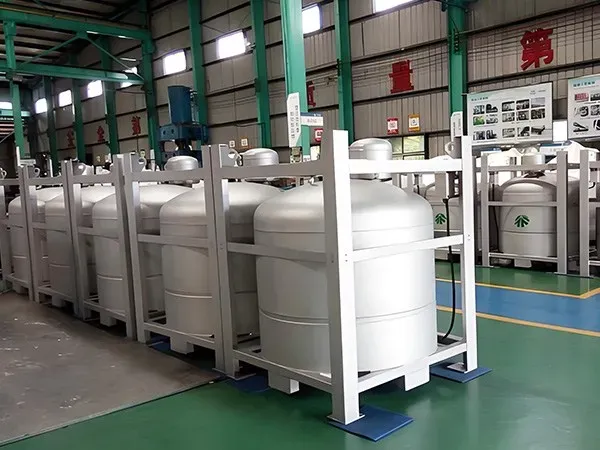
The evolution of titanium alloy heat exchanger technology continues to focus on improving efficiency, reducing weight, and enhancing fabrication precision. Surface enhancement techniques, optimized tube geometries, and advanced welding automation contribute to improved heat transfer performance and consistent product quality.
As sustainability becomes a central priority in industrial development, energy-efficient heat exchange systems play a vital role in reducing overall carbon footprints. Titanium’s durability supports extended operational cycles, aligning with environmental objectives by minimizing material waste and replacement frequency.
Choosing the right titanium alloy heat exchanger requires comprehensive analysis rather than superficial specification comparison. By carefully evaluating operating conditions, structural design options, material grades, manufacturing quality, and long-term economic impact, companies can secure equipment that delivers dependable performance for decades.
In competitive industrial markets where operational stability directly influences profitability, investing in a high-quality titanium alloy heat exchanger is not merely a technical decision but a strategic one. Partnering with an experienced manufacturer capable of providing customized engineering support and rigorous quality assurance can significantly enhance project outcomes and long-term returns.
If your organization is exploring new system installations or upgrading existing thermal equipment, a detailed technical consultation can help identify the most efficient and cost-effective titanium alloy heat exchanger solution tailored to your operational requirements.
Electrostatic Coalescer Safety: Handling High Voltage in Hazardous Areas
2026-10-12 01:29Nanoparticle-Enhanced Electrostatic Coalescers: Next-Gen Efficiency
2026-10-05 01:29Top 10 Questions When Selecting an Electrostatic Coalescer Vendor
2026-09-28 01:29Electrostatic Coalescer for Produced Water Treatment: Benefits Explored
2026-09-21 01:29Address: No. 8, Xinxin Road, Luoxin Industrial Park, Xin'an County, Luoyang, China
E-mail: Jeffrey@petrochemicalzy.com
Phone: +8615896509239

Zhengyuan Petrochemical
Create the greatest value for customers
Provide the best quality products and services
+8615896509239
Jeffrey@petrochemicalzy.com
No. 8, Xinxin Road, Luoxin Industrial Park, Xin'an County, Luoyang, China
 WhatsApp