



Get in touch
In the high-stakes environment of upstream oil and gas production, the three-phase separator stands as the heartbeat of the surface facility. Its ability to deliver clean oil, gas, and water streams determines the profitability of the entire operation. However, a silent "efficiency killer" often lurks at the bottom of these massive vessels: Sludge and Sand.
Accumulated sediment doesn't just take up space; it shifts the dynamics of fluid separation, leading to costly carryover, equipment erosion, and unplanned shutdowns. This comprehensive guide outlines the rigorous, industry-standard protocols for cleaning sludge and sand, providing maintenance teams with a blueprint for operational excellence.
Before diving into the "how," we must understand the "why." Sludge—a complex cocktail of heavy hydrocarbons, paraffin, asphaltenes, and fine silt—and abrasive sand act as insulators and obstructions.
Reduced Retention Time: As solids build up, the effective volume of the vessel decreases. This shortens the "residence time" required for gravity separation, resulting in water-in-oil contamination.
Interface Control Failure: Sludge often collects at the oil-water interface, creating a "rag layer" that confuses level sensors and dump valves.Microbial Corrosion: Stagnant sludge provides a breeding ground for Sulfate-Reducing Bacteria (SRB), leading to localized pitting corrosion that can breach vessel integrity.
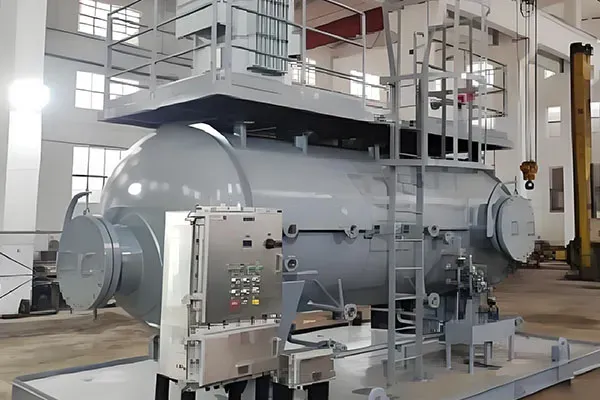
Safety in "Confined Space Entry" (CSE) is non-negotiable. Cleaning a separator involves more than just turning a valve; it requires a total bypass protocol.
Venting and Purging: After isolation via Lockout-Tagout (LOTO), the vessel must be depressurized. Standard practice involves purging with nitrogen to displace volatile organic compounds (VOCs) and hazardous gas.
Atmospheric Testing: Use calibrated multi-gas detectors to verify oxygen levels and the absence of LEL (Lower Explosive Limit) hazards before any technician nears the manway.
Secondary Containment: Ensure spill kits and berms are positioned around the drain area to prevent environmental non-compliance during the initial fluid release.
The goal is to remove the "free" liquids to expose the compacted "heel" (the solid waste).
Sequential Draining: Start by draining the water phase, followed by the oil phase. Monitoring the viscosity of the discharge helps identify the transition from liquid to semi-solid sludge.
Chemical Pre-treatment: In cases of heavy paraffin or "aged" sludge, injecting a specialized sludge liquefier or surfactant 24 hours before draining can significantly reduce the manual labor required by breaking down the molecular bonds of the hydrocarbon matrix.
Once the vessel is opened, the physical removal of "bottoms" begins.
Vacuum Truck Integration: High-cfm vacuum units are the most efficient way to extract bulk sand and grit.
Robotic Sludge Removal: For large-diameter vessels, many Tier-1 operators now utilize Ex-rated robotic crawlers. These minimize human entry into hazardous environments and use high-torque augers to liquefy and pump out hardened sand beds.
The "Dead Zone" Focus: Particular attention must be paid to the area behind the inlet diverter and the sand jetting headers. If these internal components are buried in sand, they cannot function during the next production cycle.
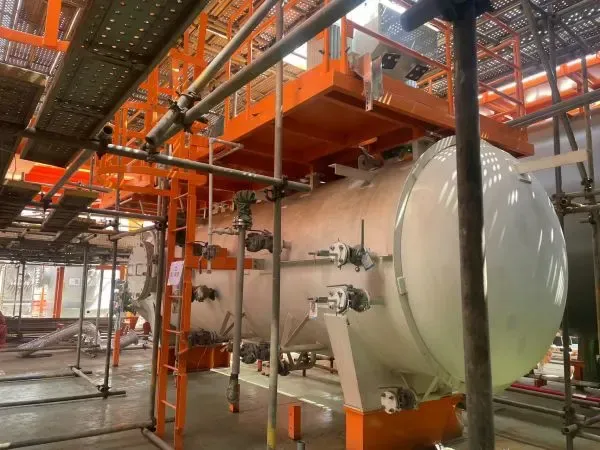
Mechanical removal leaves behind a film of oil and fine particulates.
360° Tank Cleaning Heads: Utilizing automated rotating nozzles provides a consistent impingement force that manual hosing cannot match.
Hot Water Wash: Using water heated to 80°C (176°F) helps melt wax deposits that have adhered to the coalescing plates or mist extractors.
Effluent Treatment: All wash water should be routed through a temporary weir tank or centrifuge to separate the solids before the water is sent to the disposal well.
Cleaning is only 50% of the job; the other 50% is the Integrity Audit. Once the steel is "bare," inspect for:
Baffle Integrity: Ensure weirs are level and not warped. Even a 1-degree tilt can cause uneven flow distribution.
Anode Consumption: Check the sacrificial anodes. If they are more than 50% consumed, replace them immediately to prevent galvanic corrosion.
Vortex Breaker Health: Ensure the gas and liquid outlets are free of pitting, as high-velocity flow in these areas can lead to rapid wall thinning if sand was previously present.
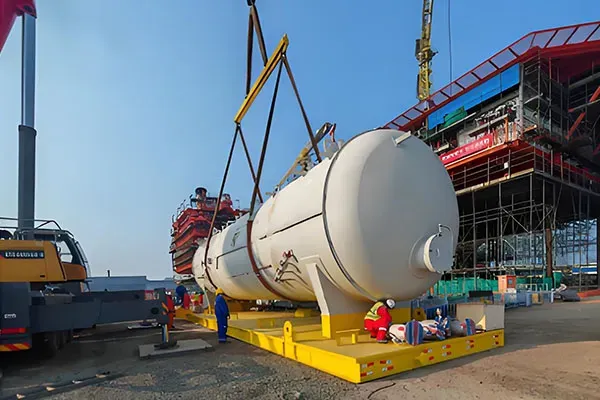
To move from "Reactive" to "Proactive" maintenance, consider these upgrades:
Online Sand Jetting Systems: Install internal spray headers that allow operators to "flush" the bottom of the vessel while it is still online.
Upstream Desanding: Evaluate the installation of a Wellhead Desander or Hydrocyclone to capture solids before they ever reach the three-phase separator.
Real-Time Sand Monitoring: Utilize ultrasonic sand sensors on the inlet piping to predict when a cleaning cycle will be necessary, moving toward Predictive Maintenance (PdM).
Cleaning a three-phase separator is a complex orchestration of safety, chemistry, and mechanical skill. By following this structured 6-step approach, operators can ensure their vessels return to service at 100% design efficiency, significantly reducing the "Total Cost of Ownership" (TCO) and safeguarding the facility's production targets.
Is your separation efficiency dropping?
[Contact our Technical Support Team] today for a custom maintenance audit or to learn more about our advanced sludge removal tools.
How Oil Water Separators Meet EPA Wastewater Limits
2026-10-26 01:29From Lab to Field: Scaling Electrostatic Coalescer Technology
2026-10-19 01:29Electrostatic Coalescer Safety: Handling High Voltage in Hazardous Areas
2026-10-12 01:29Nanoparticle-Enhanced Electrostatic Coalescers: Next-Gen Efficiency
2026-10-05 01:29Address: No. 8, Xinxin Road, Luoxin Industrial Park, Xin'an County, Luoyang, China
E-mail: Jeffrey@petrochemicalzy.com
Phone: +8615896509239

Zhengyuan Petrochemical
Create the greatest value for customers
Provide the best quality products and services
+8615896509239
Jeffrey@petrochemicalzy.com
No. 8, Xinxin Road, Luoxin Industrial Park, Xin'an County, Luoyang, China
 WhatsApp