



Get in touch
In upstream and midstream processing facilities, the performance of a three-phase separator often determines whether a production system runs smoothly or constantly struggles with instability. In oil and gas operations, where oil, water, and gas must be separated continuously under fluctuating field conditions, even minor disturbances can escalate into persistent operational issues. Among the most common and disruptive challenges are foaming and surging.
Although these problems are frequently discussed in general terms, their real impact becomes clear only when product specifications fail, downstream equipment overloads, or operators are forced into repeated manual interventions. Addressing foaming and surging is therefore not merely a matter of troubleshooting; it is a strategic effort to stabilize production, protect equipment, and improve long-term profitability.
Foaming develops when gas disperses into liquid phases and forms stable bubbles that resist collapse. Instead of separating cleanly, the oil and water layers become mixed with gas-laden froth. This froth occupies valuable vessel volume and disrupts interface control. As a result, oil may carry excessive water content, and produced water may contain higher residual hydrocarbons, increasing the burden on downstream treatment systems.
Surging, by contrast, appears as abrupt oscillations in liquid levels or interface positions inside the separator. These fluctuations are often triggered by rapid variations in inlet flow rate, pressure shifts, or sudden gas breakout from the liquid phase. When surging occurs, level control valves struggle to maintain balance, leading to unstable discharge rates and, in severe cases, liquid carryover into gas outlets.
What makes these phenomena particularly problematic is their interdependence. Foam reduces the effective settling area and interferes with level detection, which can induce unstable control responses. Conversely, sudden level changes associated with surging can intensify turbulence and promote additional foam formation. Without targeted intervention, the system may enter a recurring cycle of instability.
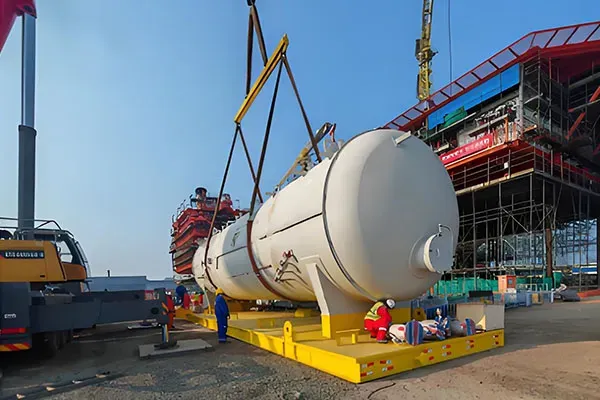
While high gas-oil ratios and fluctuating inlet conditions are obvious contributors, deeper analysis often reveals multiple interacting factors:
Naturally occurring surface-active compounds in crude oil that stabilize bubbles
Chemical additives introduced upstream for corrosion control or enhanced recovery
Inadequate inlet devices that fail to dissipate momentum effectively
Insufficient residence time caused by undersized vessels
Malfunctioning instrumentation that delays corrective control actions
In mature fields, increased water cut and declining reservoir pressure further complicate separation behavior. As operating envelopes change over time, separators originally designed for early production conditions may no longer function optimally. Recognizing this dynamic reality is essential when developing long-term solutions.
1. Refined Inlet Management
The first opportunity to prevent foam formation lies at the inlet section. A properly engineered inlet diverter or cyclonic distributor reduces shear forces and dissipates kinetic energy before fluids enter the gravity settling zone. By minimizing turbulence, the system limits gas dispersion into the liquid phase from the outset.
In high-variability wells, installing upstream flow-conditioning equipment can further smooth pressure and flow fluctuations, preventing shock loads that trigger foam generation.
2. Optimized Internal Configuration
Internals such as baffles, calming plates, coalescers, and mist extractors should be selected based on actual fluid properties rather than generic assumptions. Properly positioned weirs stabilize interface levels and create controlled flow paths that encourage phase disengagement.
In retrofitting projects, replacing outdated demisting elements with high-efficiency vane packs or mesh pads can significantly improve gas-liquid separation without requiring complete vessel replacement.
3. Targeted Chemical Treatment
Antifoam injection remains an effective tool when applied with precision. Rather than continuous high-dose injection, many operators achieve better results through controlled dosing strategies tied to real-time monitoring of foam indicators. Laboratory compatibility testing ensures that the selected formulation does not interfere with downstream processes or environmental compliance requirements.
The key is balance. Over-application may create secondary emulsification issues, while under-application fails to address the root problem.
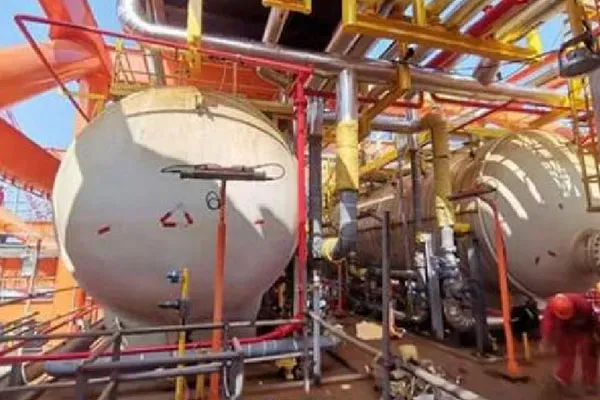
1. Stabilized Flow Control
Installing upstream surge vessels or knockout drums can buffer rapid flow variations, allowing the primary separator to operate within a more stable range. Even modest dampening capacity can significantly reduce level oscillations.
Advanced control systems with tuned proportional–integral–derivative (PID) loops enhance responsiveness without overcorrecting. Proper calibration of level transmitters is equally critical; inaccurate readings often amplify surging events rather than mitigate them.
2. Pressure and Gas Release Management
Sudden gas breakout is a common trigger for liquid instability. Maintaining steady pressure profiles and ensuring adequate venting capacity prevent gas accumulation that could disrupt liquid equilibrium.
In certain cases, adjusting operating pressure slightly can improve phase behavior and reduce vapor liberation inside the vessel.
3. Proactive Monitoring and Data Analysis
Modern facilities increasingly rely on digital monitoring platforms to detect early warning signs of instability. Trending liquid level fluctuations, gas flow variations, and differential pressures across internals provides actionable insights before severe surging occurs.
Instead of reacting to alarms, operators can shift toward predictive intervention, minimizing downtime and mechanical stress.
When foaming and surging are systematically controlled, the operational gains extend beyond immediate stability. Cleaner phase separation reduces downstream chemical consumption, lowers energy usage in dehydration or water treatment units, and improves compliance with export specifications. Equipment lifespan increases because internals experience less mechanical shock and erosion.
Moreover, stable separators enhance overall field reliability. Fewer unplanned shutdowns translate into higher uptime, predictable production targets, and improved revenue consistency. In competitive energy markets, these operational efficiencies directly influence project viability.
Three-phase separators should not be viewed as static assets installed once and left unchanged. As production profiles evolve, separation systems require reassessment and optimization. By combining thoughtful mechanical design, intelligent process control, and disciplined maintenance practices, operators can transform separators from reactive bottlenecks into stable, high-performance process units.
Companies that invest in performance audits, customized internal upgrades, and operator training consistently achieve measurable improvements in separation efficiency and operational confidence. Preventing foaming and surging is not simply about solving isolated problems; it is about engineering a resilient production system capable of adapting to changing field conditions.
If your facility is experiencing unstable levels, inconsistent product quality, or recurring foam-related interruptions, a comprehensive separator evaluation may reveal untapped optimization potential. Proactive refinement today can secure safer, smoother, and more profitable operations for years to come.
Electrostatic Coalescer Safety: Handling High Voltage in Hazardous Areas
2026-10-12 01:29Nanoparticle-Enhanced Electrostatic Coalescers: Next-Gen Efficiency
2026-10-05 01:29Top 10 Questions When Selecting an Electrostatic Coalescer Vendor
2026-09-28 01:29Electrostatic Coalescer for Produced Water Treatment: Benefits Explored
2026-09-21 01:29Address: No. 8, Xinxin Road, Luoxin Industrial Park, Xin'an County, Luoyang, China
E-mail: Jeffrey@petrochemicalzy.com
Phone: +8615896509239

Zhengyuan Petrochemical
Create the greatest value for customers
Provide the best quality products and services
+8615896509239
Jeffrey@petrochemicalzy.com
No. 8, Xinxin Road, Luoxin Industrial Park, Xin'an County, Luoyang, China
 WhatsApp