



Get in touch
A titanium alloy heat exchanger in an oil refinery functions much like any other heat exchanger but is specifically chosen for its exceptional corrosion resistance, mechanical strength, and thermal conductivity in harsh refinery environments.
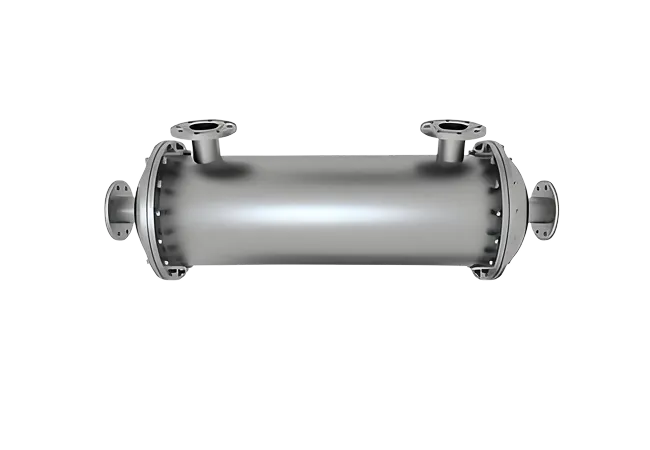
It operates on the principle of indirect heat exchange: two fluids (typically a hot process stream and a cooler medium like water or air) flow through separate channels or tubes within the exchanger.
Heat is transferred from the hot fluid to the cooler one through the titanium alloy walls, without the fluids mixing.
Common designs include shell-and-tube, plate, and double-pipe exchangers.
In a shell-and-tube exchanger (the most common in refineries), one fluid flows through titanium tubes while the other flows over them within a shell.
The titanium alloy (often Grade 2 or Ti-6Al-4V) forms the tubes or plates.
Titanium's resistance to chlorides, sulfides, and acidic environments makes it ideal for dealing with:
Desalinated seawater
Sour oil/gas (containing hydrogen sulfide)
Aggressive cleaning chemicals
High-temperature hydrocarbon processing streams
Condensers: to condense steam or hydrocarbons.
Coolers: to cool down processed hydrocarbon streams before further treatment or storage.
Reboilers: in distillation columns.
Preheaters: to raise feedstock temperatures before entering cracking units.
Corrosion Resistance: Against saltwater, naphthenic acids, and other aggressive refinery fluids.
Longevity: Titanium’s resistance to scaling and pitting extends service life.
Low Maintenance: Fewer shutdowns and cleaning cycles.
High Heat Transfer Efficiency: Thin titanium walls and good thermal properties facilitate efficient exchange.
Cost: Titanium is significantly more expensive than carbon steel or stainless steel.
Welding & Fabrication Complexity: Requires special handling and fabrication techniques.
In summary, titanium alloy heat exchangers are crucial in oil refineries where harsh fluids and high temperatures would quickly degrade conventional materials. Their use ensures reliable, long-term heat transfer under extreme conditions.
Electrostatic Coalescer Safety: Handling High Voltage in Hazardous Areas
2026-10-12 01:29Nanoparticle-Enhanced Electrostatic Coalescers: Next-Gen Efficiency
2026-10-05 01:29Top 10 Questions When Selecting an Electrostatic Coalescer Vendor
2026-09-28 01:29Electrostatic Coalescer for Produced Water Treatment: Benefits Explored
2026-09-21 01:29Address: No. 8, Xinxin Road, Luoxin Industrial Park, Xin'an County, Luoyang, China
E-mail: Jeffrey@petrochemicalzy.com
Phone: +8615896509239

Zhengyuan Petrochemical
Create the greatest value for customers
Provide the best quality products and services
+8615896509239
Jeffrey@petrochemicalzy.com
No. 8, Xinxin Road, Luoxin Industrial Park, Xin'an County, Luoyang, China
 WhatsApp